

The Guardian amends food trend piece after misreporting ingredients in Korean bibimbap sauce
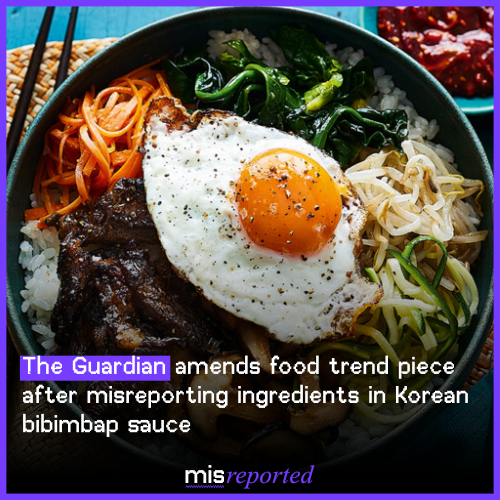
The Guardian has amended a lifestyle article on emerging “posh nosh” food trends after incorrectly describing the ingredients of bibimbap sauce, a staple of Korean cuisine.
The original piece, part of the paper’s light-hearted Pass notes column on Waitrose’s annual food trends report, stated that bibimbap sauce contained honey and white miso paste. A correction issued nearly four weeks later clarified that the sauce is in fact made with gochujang, sesame oil, soy sauce, sugar, rice vinegar and garlic.
On its face, the error is minor, involving a casual list of ingredients in an otherwise playful article about middle-class shopping habits and viral food fashions. But the misstatement sits within a familiar pattern in lifestyle and food reporting, where global cuisines are often filtered through approximation, aesthetic shorthand or assumed fusion rather than precise description. Honey and white miso subtly recast a distinctly Korean sauce into something more recognisably “pan-Asian” or Western-friendly, even if unintentionally.
The correction restores factual accuracy, but only after the original framing had circulated widely. In a piece explicitly celebrating “authentic” global flavours, the slip undercut its own premise by mischaracterising the very dish held up as evidence of culinary sophistication. As with many such amendments, the clarification appeared quietly at the bottom of the article, long after readers had absorbed the original description.
The episode is a reminder that misreporting is not confined to politics, war or economics. Even in lifestyle coverage, small factual errors can reinforce vague or distorted understandings of other cultures, particularly when speed, tone and trend-chasing take precedence over precision.