

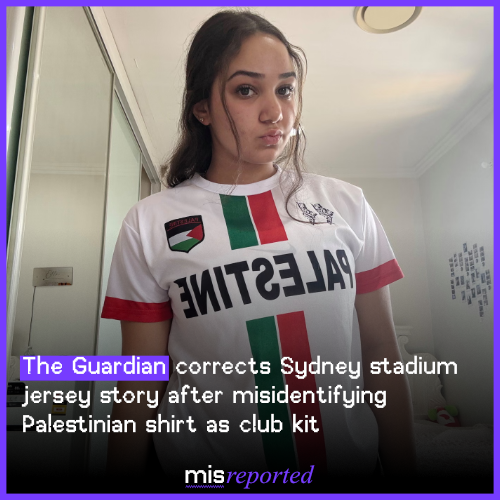
The Guardian corrects Sydney stadium jersey story after misidentifying Palestinian shirt as club kit
The Guardian initially reported that a teenager barred from an A-League match was wearing a legitimate club jersey linked to a Chilean football team.
A later correction clarified that the shirt was not affiliated with any club and was instead a political garment bearing Palestinian symbolism.
The amendment changes the core context of the incident, but only after the original framing had already shaped reader perception.

The Guardian amends food trend piece after misreporting ingredients in Korean bibimbap sauce
The Guardian corrected a food trends article after wrongly listing honey and white miso as ingredients in Korean bibimbap sauce.
The original error subtly reframed a specific Korean dish through a more generic or Westernised lens, undermining the article’s emphasis on “authentic” global flavours.
As with many low-profile corrections in lifestyle journalism, accuracy was restored quietly, after the initial mischaracterisation had already shaped reader perception.
The Problem Isn’t Ethical Fashion. It’s How We Report It.
Small reporting errors in ethical fashion stories often look harmless. But when brands and supply chains are misdescribed, the damage is already done. Corrections may fix the facts, but they rarely undo the moral narratives readers absorb first, reshaping how ethics, responsibility and credibility are understood in fashion.
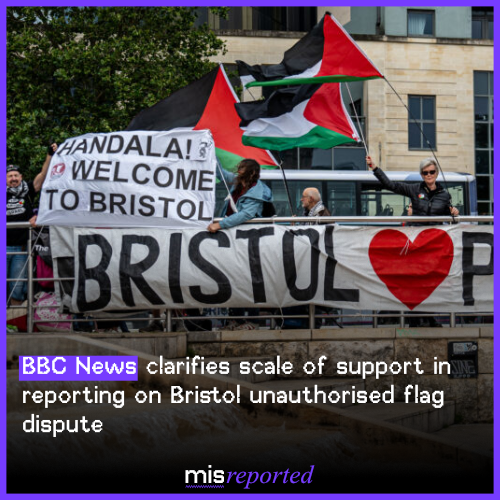
BBC News clarifies scale of support in reporting on Bristol unauthorised flag dispute
The BBC corrected a report on Bristol’s St George’s flag dispute after clarifying that only four of 152 written submissions supported keeping the flags.
The original wording risked overstating public support for the flags in a highly charged community debate.
As with many quiet clarifications, the amendment restores accuracy but follows an initial framing that may already have shaped reader perception.
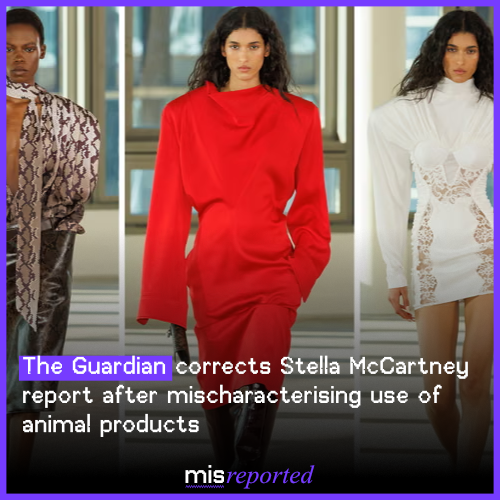
The Guardian corrects Stella McCartney report after mischaracterising use of animal products
The Guardian corrected its report on Stella McCartney’s finances after wrongly stating the brand uses no animal products.
The amendment clarifies that while the label avoids leather and fur, it does use materials such as silk and wool.
The error illustrates how imprecision around ethical claims can shape brand narratives, particularly during periods of financial stress.
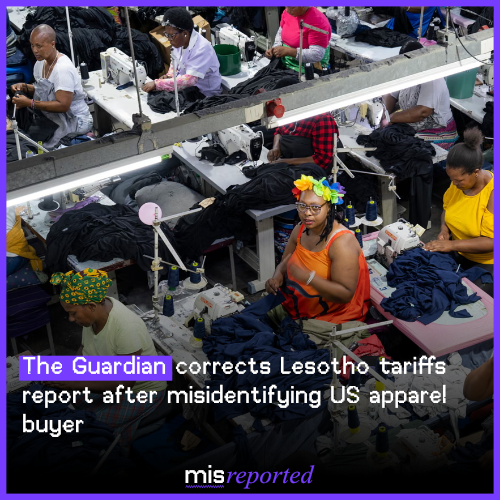
The Guardian corrects Lesotho tariffs report after misidentifying US apparel buyer
The Guardian amended its reporting on the impact of US tariffs on Lesotho’s garment industry after wrongly identifying Gap as a company sourcing products from the country.
The original article used the brand as an illustrative example of Lesotho’s exposure to US supply chains, strengthening the narrative of dependency and vulnerability before the claim was withdrawn following clarification from the company.
While the correction does not alter the broader account of economic strain, it highlights how even small errors in attribution can distort responsibility in trade reporting, and how such fixes tend to arrive long after the initial framing has taken hold.

Financial Times corrects book sales figure after conflating volumes with value
The Financial Times corrected an article after confusing US book sales volumes with revenue, stating $3.1bn instead of 3.1bn copies sold.
The error materially understated the size of the US book market in a column focused on valuation and investor sentiment.
The episode shows how small unit errors in financial reporting can distort economic context even when the broader narrative remains intact.
AI Didn’t Burn Dinner - It Burned the Cookbook
The Guardian’s recent correction to its reporting on AI-generated recipes was narrow, technical and justified. It clarified that a notorious “cook with glue” example stemmed from misread Reddit comments rather than satire, and that Meta trained its models on pirated databases rather than compiling them. Accuracy demanded those fixes. But focusing too heavily on the mechanics of the error risks missing the larger point. Even when the facts are tidied up, the underlying problem remains intact, and it is growing.

The Guardian amends AI recipe coverage after errors on source attribution and training data
The Guardian corrected its reporting on AI-generated recipe content, clarifying that a cited glue-cooking error originated from Reddit comments and that Meta used, rather than compiled, the Library Genesis database.
The original framing suggested failures involving satirical sources and direct creation of pirated datasets, which materially altered how readers would interpret responsibility and scale.
That distinction matters, and misframing it risks undermining public trust, inflating narratives, or distorting accountability.
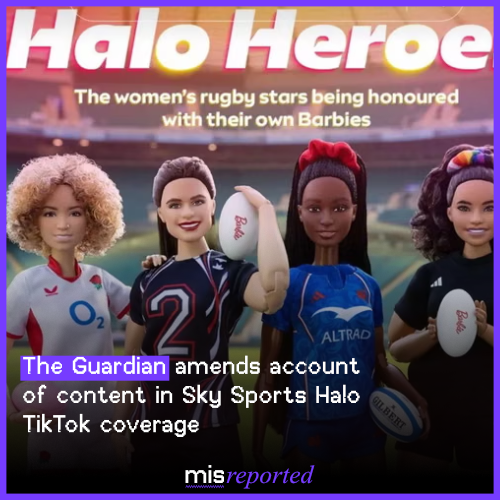
The Guardian amends account of content in Sky Sports Halo TikTok coverage
The Guardian corrected its coverage of Sky Sports’ Halo TikTok channel, clarifying that a widely cited “Crashgate” post was not produced by Halo but was a parody from another account.
The original framing attributed that content to Halo, reinforcing impressions of sexism that were not fully supported by the channel’s actual output.
That distinction matters, and misframing it risks undermining public trust, inflating narratives, or distorting accountability.

FT corrects scope of online marketplace listings in France’s Shein investigation
The Financial Times has clarified that French authorities found childlike sex dolls only on Shein and AliExpress, not on Temu or Wish as first reported.
The original wording overstated the scope of documented violations, blurring the distinction between platforms with confirmed infractions and those merely under broader investigation.
That distinction matters, and misframing it risks misdirecting regulatory scrutiny, distorting public understanding of the evidence, and overstating the legal exposure of companies not implicated by the findings.
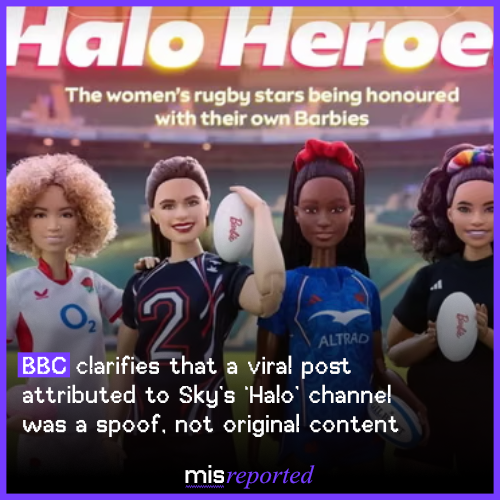
BBC clarifies that a viral post attributed to Sky’s ‘Halo’ channel was a spoof, not original content
The BBC has clarified that a viral post referenced in its report was not produced by Sky’s Halo channel but was a user-generated mock-up.
Previously, the story described the spoof as an original Halo post, strengthening the impression of the channel’s misjudged editorial tone.
That distinction matters, and misframing it risks exaggerating Sky’s error, distracting from legitimate criticism of Halo’s concept, and blurring the line between authentic content and social-media parody.
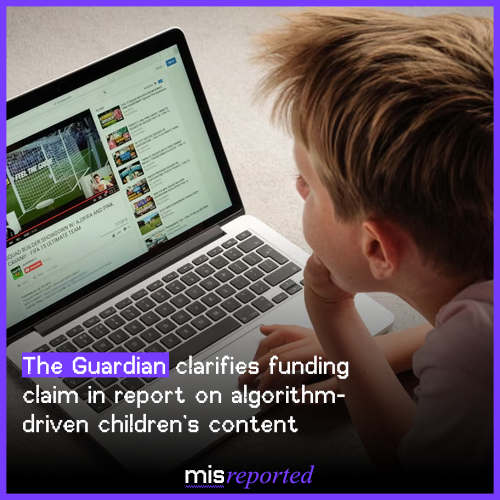
The Guardian clarifies funding claim in report on algorithm-driven children’s content
The Guardian has clarified that the BBC is “pretty much” the only funder of children’s TV in the UK, not the sole funder.
Previously, it omitted Channel 5’s role, overstating the degree of public-service isolation in the funding landscape.
That distinction matters, and misframing it risks exaggerating institutional decline and obscuring policy options in a sector already under strain from platform-driven disruption.

The Guardian corrects claim that new research was the first global study of nature connectedness
The Guardian has clarified that a study on global “nature connectedness” was one of the first of its kind, not the first.
Previously, it had described the research as the world’s first such study.
That distinction matters, and misreporting it risks overstating the study’s originality and distorting its place within ongoing scientific research.

The Times corrects headline claiming under-nines saw Nazi propaganda on Roblox
The Times has clarified that it had no proof children under nine saw Nazi propaganda on Roblox.
Previously, its headline stated that “under-nines” had seen such material.
That distinction matters, and misreporting it risks overstating verified harm and fuelling misplaced panic over children’s exposure to online extremism.

Financial Times corrects claim that Dior’s market valuation nearly doubled that of Mercedes-Benz
The Financial Times has clarified that Dior does not have its own market valuation, as it is part of LVMH and not separately listed.
Previously, it suggested the fashion house was worth nearly twice as much as Mercedes-Benz.
That distinction matters, and misframing it risks misleading readers about the structure of luxury conglomerates and overstating Dior’s financial autonomy within the LVMH portfolio.

Barron’s backtracks on Getty Trust funding figure in Katherine Fleming profile
Barron’s has clarified that the Getty Trust’s capital improvement program is valued between $600 million and $800 million, not $600,000 to $800,000.
Previously, it had reported the lower figure, implying a modest refurbishment rather than a major institutional redevelopment.
That distinction matters, and misframing it risks stirring needless alarm by undermining confidence in financial reporting and diminishing the perceived scale of one of the world’s most influential cultural institutions.

Telegraph corrects dating error on National Gallery benches in arts coverage
The Telegraph has corrected its report to state that the National Gallery’s leather benches date from the late twentieth century.
Earlier coverage described them as Victorian, suggesting the removal of historic furniture.
Accurate dating matters because errors of chronology can inflate ordinary updates into stories of cultural loss and misplaced outrage.

The New York Times Corrects Record On Park Closures, Amid Shutdown
The New York Times has corrected its reporting to clarify that not all U.S. national parks were closed during the government shutdown, with many trails and outdoor areas remaining accessible.
Previously, it had stated that visitors were being “turned away nationwide,” implying a complete closure of the park system.
That distinction matters, and misframing it risks stirring needless alarm by exaggerating the scale of disruption and obscuring the policy fragility behind repeated shutdowns.

NPR backtracks on timeline and spelling errors in Kimmel and Colbert suspension coverage
NPR has clarified that Jimmy Kimmel was suspended on September 17 for comments made on September 15, and that John Oliver’s name was misspelled.
Previously, it stated Kimmel was suspended on September 7 for remarks the night before, while also misnaming Oliver.
That distinction matters, and misframing it risks stirring needless alarm by misrepresenting the timeline of a high-profile suspension and further confusing a charged debate over free speech and media censorship.