

This week’s corrections do not scatter randomly across the news agenda. They cluster. And the gravity pulling them together is not policy, health, economics or even war in the abstract. It is Israel. Not always named in headlines, not always central to the stated subject, but repeatedly present as an organising lens through which facts were stretched, assumptions smuggled in, and precision quietly relaxed.
This week’s corrections do not scatter randomly across the news agenda. They cluster. And the gravity pulling them together is not policy, health, economics or even war in the abstract. It is Israel. Not always named in headlines, not always central to the stated subject, but repeatedly present as an organising lens through which facts were stretched, assumptions smuggled in, and precision quietly relaxed.

Misreported.org is an independent watchdog exposing errors, distortions and omissions in the mainstream media.
We highlight misreporting that shapes public opinion and damages trust, holding powerful news outlets to account.
Fiercely independent and free of political or corporate ties, our mission is simple: to demand accuracy, transparency and responsibility from those who inform the public.
This week’s corrections do not scatter randomly across the news agenda. They cluster. And the gravity pulling them together is not policy, health, economics or even war in the abstract. It is Israel. Not always named in headlines, not always central to the stated subject, but repeatedly present as an organising lens through which facts were stretched, assumptions smuggled in, and precision quietly relaxed.
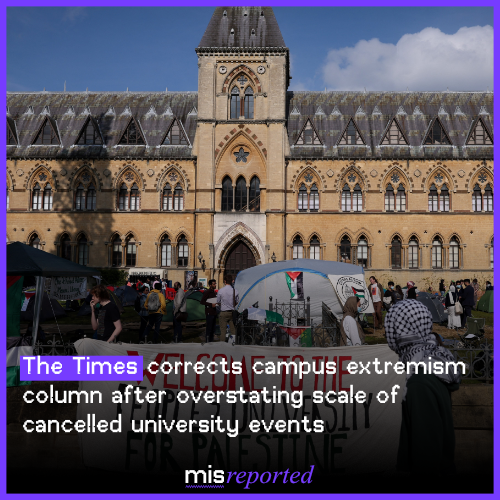
The Times corrected an opinion column after clarifying that only one university event, not three, was cancelled on safety grounds.
The original wording overstated the scale of campus refusals, strengthening the impression of widespread institutional retreat.
While the correction restores accuracy, it follows an initial framing that may already have shaped readers’ perceptions of British universities.
The BBC corrected Holocaust Memorial Day coverage after referring to the victims as “six million people” or “six million mostly Jewish people” rather than six million Jews.
The miswording diluted the specificity of the Holocaust as the targeted genocide of the Jewish people, not a general wartime tragedy.
Although the BBC apologised, the correction followed widespread broadcasts on a day explicitly dedicated to historical precision and remembrance.
The Times corrected a report on youth welfare after overstating how widely special educational needs support leads to child disability allowance.
It also amended a claim that eighty-three percent of adults have a mental health condition at any one time, clarifying that the figure refers to lifetime prevalence.
Both errors strengthened a political argument about a “lost generation” before being quietly corrected after publication.
CNBC corrected its Venezuela oil production analysis after misattributing a statement about potential output increases to the wrong Chevron executive.
The quote suggested a relatively rapid production boost, lending optimism to an otherwise cautious assessment of Venezuela’s oil prospects.
While the correction fixes attribution, it arrives after the initial framing had already amplified expectations around US-led recovery efforts.
Journalism’s drive for speed often undermines accuracy, especially in conflict zones. The recent correction by Al Jazeera — changing a reported death to a serious injury — shows how initial misframing can shape public perception, harden narratives and distort understanding long after an editor’s note.
BBC News has corrected its reporting on the Nipah virus outbreak after earlier coverage overstated the number of confirmed cases and implied a wider health-screening response. Official figures indicate only two confirmed infections in West Bengal, India, and all traced contacts have tested negative, a significantly narrower outbreak than initially reported.
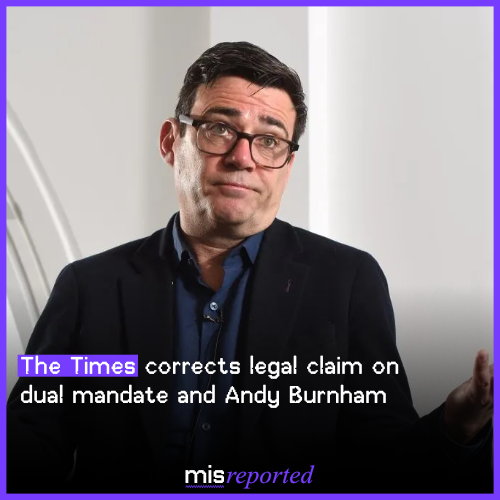
The Times has corrected its commentary on dual mandates after wrongly suggesting Labour’s NEC could have allowed Andy Burnham to serve as both a mayor with policing powers and an MP. The clarification notes that UK law — not party rules — prohibits mayors with policing powers from also being Members of Parliament.
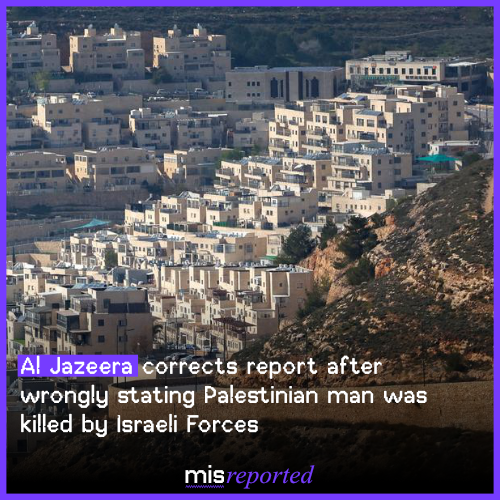
This correction follows a familiar pattern in conflict reporting. In the rush to publish, early claims hardened into definitive statements, only to be walked back once fuller information emerged. As so often, the correction arrived after the narrative had already taken hold.
This week’s corrections tell a more coherent story than the outlets issuing them might intend. Across politics, culture, lifestyle and foreign affairs, Israel was not simply a recurring subject. It was the gravitational centre around which errors clustered, narratives hardened and corrections followed late.
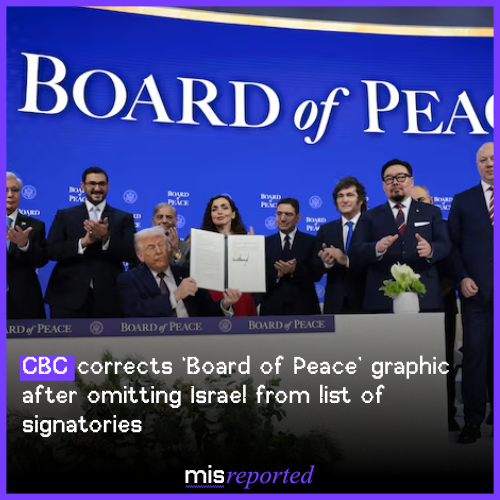
CBC initially published a graphic listing countries joining Trump’s “Board of Peace” that omitted Israel, despite Israel having accepted an invitation.
The broadcaster later corrected the omission, acknowledging that Israel should have been included among the signatories.
The error highlights how selective omissions, even when later corrected, can reflect and reinforce perceived editorial bias in coverage of Israel-related issues.
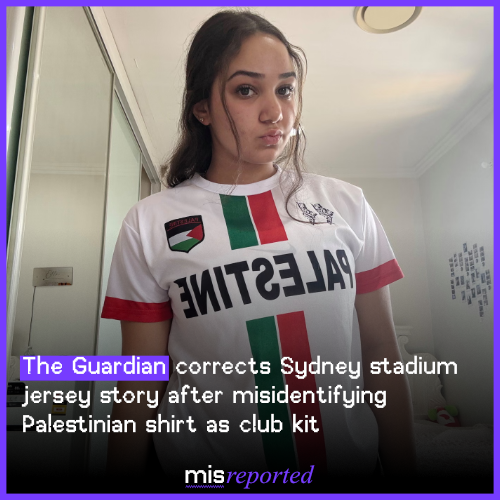
The Guardian initially reported that a teenager barred from an A-League match was wearing a legitimate club jersey linked to a Chilean football team.
A later correction clarified that the shirt was not affiliated with any club and was instead a political garment bearing Palestinian symbolism.
The amendment changes the core context of the incident, but only after the original framing had already shaped reader perception.