

CNBC Corrects Venezuela Oil Comeback Report After Misattributing Chevron Claim
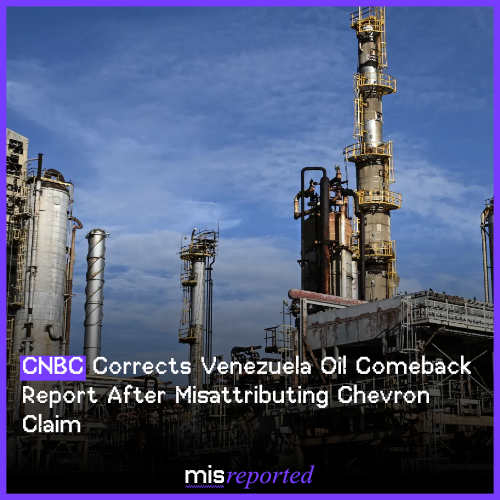
CNBC has amended a detailed analysis of Venezuela’s prospects for restoring oil production after incorrectly attributing a key statement about output growth to the wrong Chevron executive, a small-seeming fix that nevertheless sharpens how optimistic parts of the story appeared.
The original article explored whether Venezuela could claw its way back from roughly 800,000 barrels of crude a day to the three-million-barrel levels it once sustained, in the wake of Nicolás Maduro’s capture and renewed US interest in the country’s vast reserves. Embedded in that analysis was a quotation suggesting Chevron believed it could lift Venezuelan production by about fifty percent within eighteen to twenty-four months. That remark carried weight because Chevron is the only major US oil company still operating in the country, and its assessment served as a rare concrete note of near-term optimism amid otherwise cautious forecasts.
In a correction appended after publication, CNBC clarified that the statement had been misattributed. The words were indeed spoken at a White House meeting, but the initial version credited the wrong Chevron figure. The correction does not alter the substance of Chevron’s position, yet it matters because attribution is part of credibility in a story built on expert confidence, boardroom signals and political access. In energy markets, who says something can be as important as what is said.
The broader article remains careful in tone, repeatedly stressing that Venezuela’s subsurface wealth has never been the problem, and that “above-surface constraints” — sanctions, governance, infrastructure decay and investor mistrust — are the real barriers. Most analysts quoted argue that even modest gains will take years, while a full return to three million barrels a day would likely require decades and investment running into the hundreds of billions of dollars. Against that backdrop, a misattributed quote suggesting rapid gains risked standing out as a stronger endorsement of the Trump administration’s ambitions than the evidence supports.
As with many such corrections, the amendment is narrow and factual, tucked away beneath a long and complex piece. But the initial framing had already done its work, positioning Chevron’s voice as a central pillar of plausibility for a faster recovery. Correcting who delivered that message restores technical accuracy, but it does not revisit how prominently that optimism was woven into the narrative of a possible Venezuelan oil resurgence.