

The Times corrects campus extremism column after overstating scale of cancelled university events
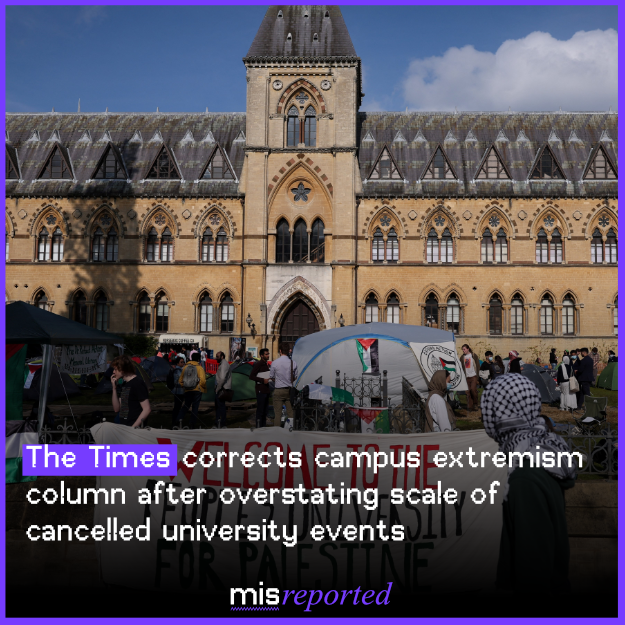
The Times has issued a clarification to an opinion column warning of Islamist extremism on British university campuses after correcting a factual claim about cancelled speaking engagements.
The original column, written by UAE-based analyst Amjad Taha and published on 14 January, stated that his planned speaking engagements at Birmingham, Wolverhampton and Aston universities had been cancelled on safety grounds. A correction published on 30 January clarified that this was inaccurate. In fact, only a single event at the University of Birmingham was cancelled, albeit one intended to be attended by students from all three institutions.
The distinction matters because the column’s authority rests in part on the scale of institutional retreat it describes. Presenting the cancellations as affecting three separate universities implied a coordinated or widespread refusal to host the speaker, reinforcing the article’s broader argument that British campuses have systematically surrendered to extremist pressure. The corrected account narrows that claim to one cancelled event rather than three independent decisions.
This does not negate the column’s central thesis about antisemitism, intimidation or the climate faced by Jewish students, nor does it resolve debates over campus safety or free expression. But it does materially alter the evidentiary weight of a key anecdote used to support those conclusions. A single cancellation due to security concerns is qualitatively different from multiple universities independently withdrawing.
As with many corrections to comment pieces, the clarification restores factual precision without revisiting the rhetorical force built on the original framing. Readers encountering the first version would reasonably have inferred a broader institutional pattern than the corrected record supports. By the time the amendment appears, the impression of systemic collapse may already have been absorbed.
The episode illustrates a familiar tension in opinion journalism. Argument and analysis are permitted, even encouraged, but when factual claims are used as proof points, their accuracy shapes how sweeping conclusions are received. Corrections repair the record, but they rarely recalibrate the argument that relied on the error.