

The Guardian amends winter NHS overcrowding report after clarifying mortality figures
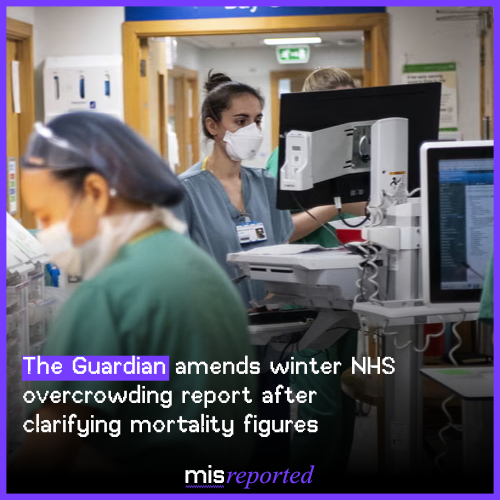
The Guardian has amended an article warning that hospitals in England face “dangerous winter overcrowding” after correcting how a key mortality statistic was presented. The change clarifies that a widely cited estimate of deaths linked to long A&E waits did not relate specifically to last winter, nor to delays occurring after hospital admission.
The original report, published on December 14, drew on new analysis from the Health Foundation showing a rise in delayed discharges, with more patients medically fit to leave hospital remaining “stranded” in beds. It combined those findings with warnings from senior clinicians that winter pressures, flu outbreaks and impending resident doctors’ strikes could increase the risk of patient harm and death.
In supporting that argument, the article referenced an estimate from the Royal College of Emergency Medicine that more than 16,600 people died “last winter” as a result of delays in A&E. The Guardian later clarified that this figure in fact related to the whole of 2024 and referred to deaths associated with long waits before admission, rather than delays in care after patients had already been admitted to hospital.
The amendment narrows the causal link implied in the original framing. While long emergency department waits remain a serious concern, the corrected wording makes clear that the mortality analysis was broader in both timeframe and mechanism than initially suggested. The distinction matters in a highly charged policy debate where specific figures are often used to signal imminent risk or system failure.
The underlying findings on delayed discharges and bed occupancy were not disputed, nor were the warnings from NHS leaders about winter capacity. But the episode illustrates how combining multiple strands of data into a single narrative can overstate precision, particularly when statistics drawn from different contexts are used to reinforce one another.
The Guardian noted the correction transparently, but the case reflects a familiar pattern in health reporting under pressure. In periods of heightened public anxiety, figures that capture attention can harden quickly into shorthand explanations, even when their scope is more limited. Clarifying those boundaries after publication corrects the record, but rarely travels as far as the initial claim.