

The Guardian amends climate finance report after multiple corrections and clarifications
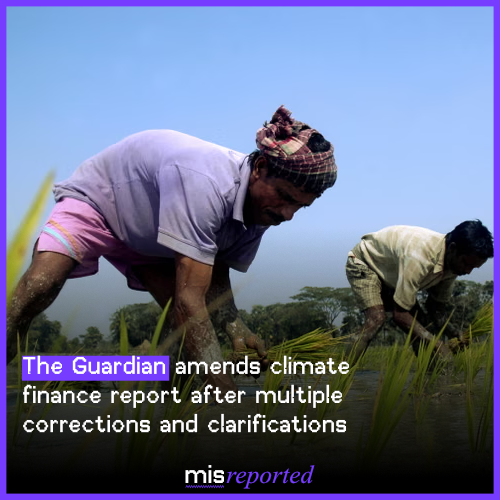
The Guardian has amended a report on international climate finance after acknowledging a series of shortcomings in how the findings of an NGO study were presented, including attribution, balance and historical context. The changes followed requests for a right of reply from institutions criticised in the original article and resulted in revisions to both the headline and substantive sections of the text.
The original piece reported that less than three percent of international aid aimed at reducing carbon emissions supported a “just transition” for workers and communities moving away from polluting industries, citing new analysis by the NGO ActionAid. Framed ahead of forthcoming UN climate negotiations, the article argued that climate finance risks deepening inequality and suggested that major multilateral funds were failing to engage meaningfully with affected communities.
After publication, the Climate Investment Funds and the Green Climate Fund contacted the Guardian’s readers’ editor to note that they had not been given an opportunity to respond prior to publication. The newspaper agreed that, in line with fairness standards, their responses should have been sought in advance. Their statements were subsequently added to the article, contesting the study’s methodology and disputing the conclusions drawn about their programmes and governance.
Further amendments were made to remove a section criticising a project in Bangladesh involving a shift from rice to mango production. The Guardian clarified that the project took place in the 2000s and was unrelated to either of the climate funds assessed in the ActionAid study, a distinction that had not been made clear in the original version. The headline was also revised to explicitly attribute the findings to the NGO report, rather than presenting them as standalone conclusions.
The sequence of edits illustrates how advocacy-driven research, when reported at speed, can blur into broader claims about institutional performance without sufficient qualification. While the ActionAid analysis raised substantive questions about how climate finance is allocated and evaluated, the subsequent corrections narrowed the scope of what could fairly be inferred from the available data and documentation.
The Guardian’s amendments do not negate the debate over whether climate funding adequately supports workers and communities. But they do highlight the importance of separating an NGO’s interpretation of public data from verified assessments of policy outcomes, and of ensuring that criticised institutions are given the chance to respond before conclusions are amplified.