IPSO finds Telegraph linked children's kite-making to Hamas paragliders without basis
IPSO upheld part of a complaint after The Telegraph suggested children's kite-making at a camp referenced the 7 October Hamas paraglider attacks.
Corrections and misreporting in coverage of diplomacy, the Middle East, Israel and international relations.
The New York Times corrected a Gaza bomb-size caption and removed a line suggesting Israelis' status as 7 October victims was a matter of perception.
IPSO upheld part of a complaint after The Telegraph suggested children's kite-making at a camp referenced the 7 October Hamas paraglider attacks.
The BBC corrected Holocaust Memorial Day coverage after referring to the victims as “six million people” or “six million mostly Jewish people” rather than…
This correction follows a familiar pattern in conflict reporting. In the rush to publish, early claims hardened into definitive statements, only to be…
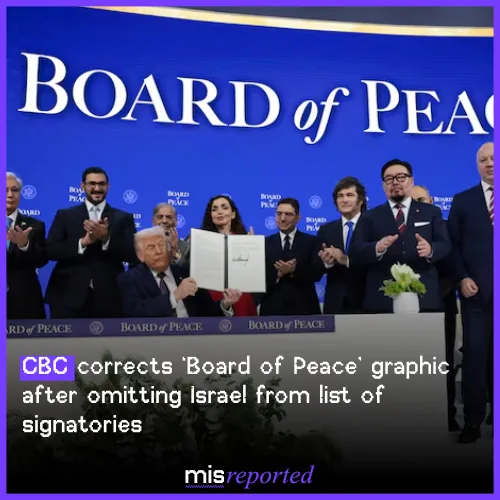
CBC initially published a graphic listing countries joining Trump’s “Board of Peace” that omitted Israel, despite Israel having accepted an invitation.
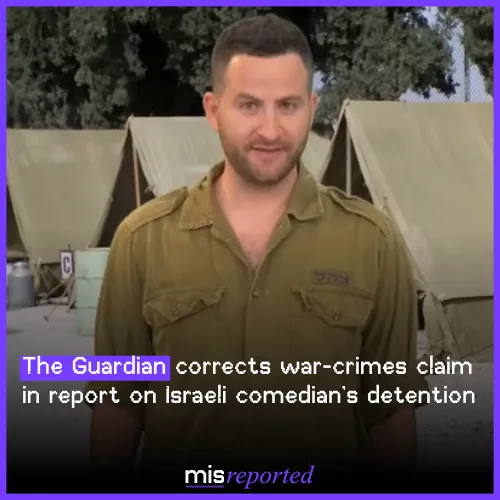
The Guardian amended a report on Guy Hochman’s detention after removing a false claim that he took part in the destruction of a mosque in Gaza.
The New York Times corrected its reporting on the American Historical Association after overstating attendance at a vote and the organisation’s total…
Al Jazeera corrected a report after wrongly stating that US–Israel communication had broken down, when the reported suspension concerned US–Iran talks.
The New York Times corrected its ICJ reporting after misstating an allegation made against Myanmar. The article wrongly referred to 54 houses being…
The Guardian has clarified that the November hunger-strike letter was signed by about 100 medical professionals, not more than 800.
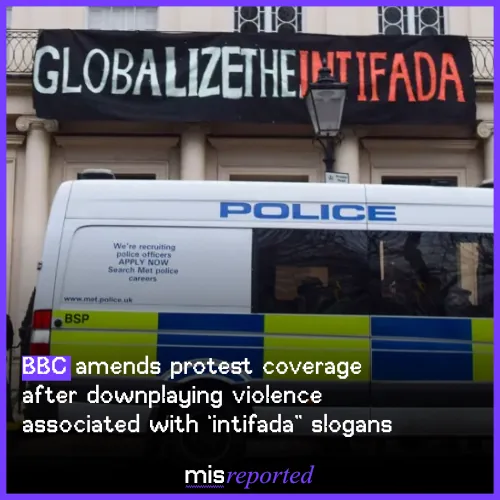
The BBC altered its background explanation of “intifada” after criticism that it downplayed the violence historically associated with the term.
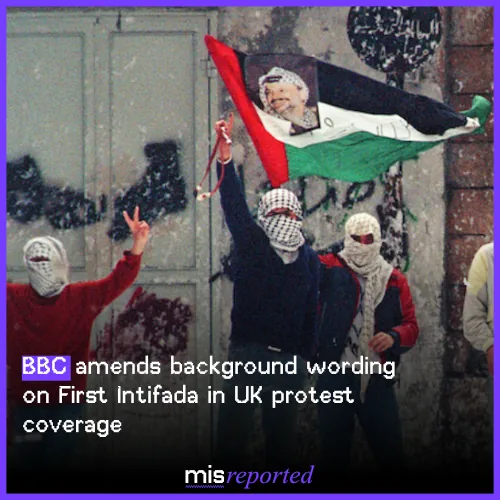
BBC corrected its reporting on background references to the First Intifada, clarifying that its earlier language did not provide a sufficiently complete…
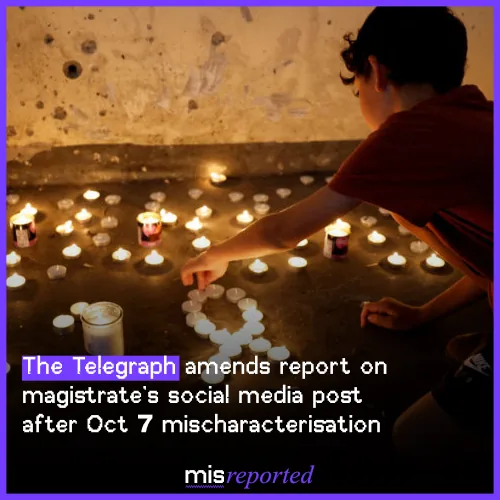
The Telegraph corrected an article after clarifying that a Hamas video shared by a magistrate did not contain language describing Israel as a cancer to be…
NewsGuard corrected claims that ChatGPT displayed an AIPAC advertisement after finding the widely shared screenshot was fabricated.
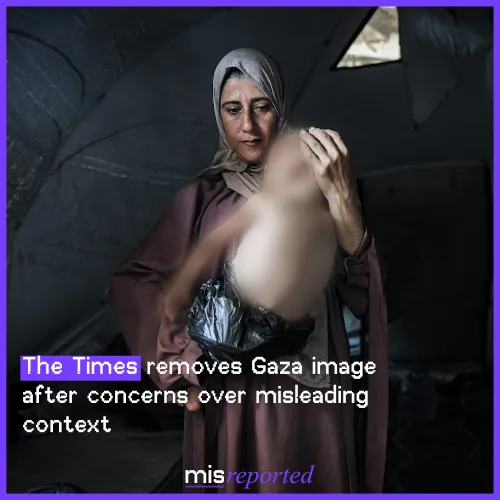
The Times removed a Gaza photograph and deleted related text after concerns were raised that the material lacked essential medical and operational context.
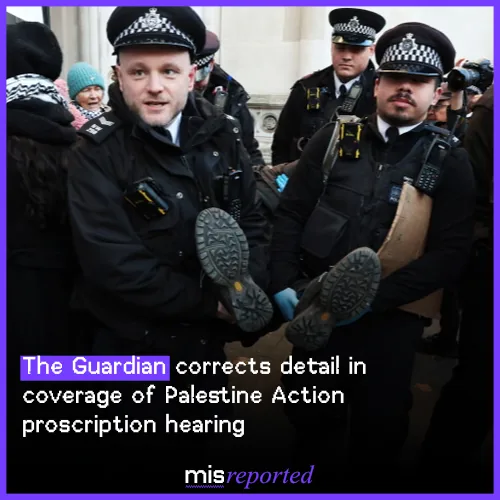
The Guardian corrected its reporting on the High Court case involving Palestine Action by amending a spelling error in a named individual’s details.
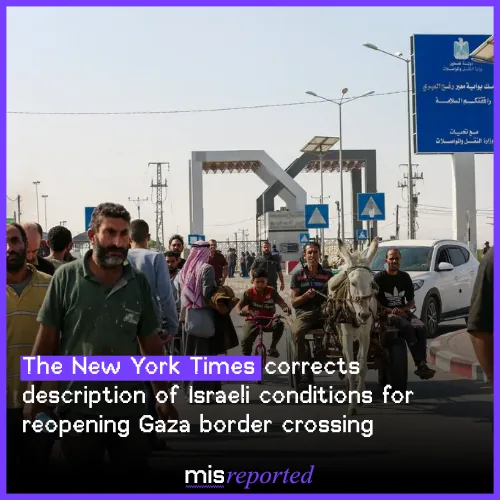
The New York Times corrected its reporting on the reopening of the Rafah crossing, clarifying that Israel said it would be opened in both directions once…
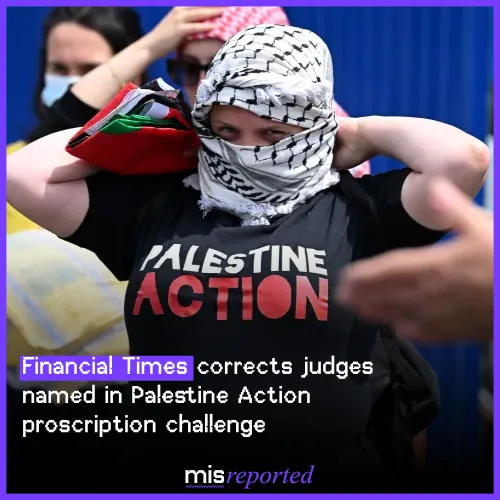
The Financial Times corrected an error identifying the judges assigned to hear the High Court challenge to the government’s proscription of Palestine Action.
The New York Times has clarified that the Israel Defense Forces reservist cited in its Binance terrorism-finance lawsuit coverage was named Omer Balva,…
A new analysis of BBC headline patterns has exposed a structural imbalance that the corporation can no longer explain away as coincidence. Over the past…
The BBC has clarified that 4,000 pallets of aid are blocked from entering Gaza, not 44,000 — an eleven-fold exaggeration in the original report.
Fox News has corrected its report on a violent anti-Israel attack in Toronto, removing an incorrectly attributed quote to the Simon Wiesenthal Center’s…
Tim Davie’s resignation as BBC director-general followed the exposure of a doctored Trump clip and mounting bias scandals in Gaza coverage.
The Wall Street Journal has clarified that the advocacy group quoted is the Hostages and Missing Families Forum, not “Hostages Families Forum.”