The Week That Was: Speed, Certainty and the Prewritten Story
NPR's Alito retraction, CNN's Mamdani correction and the BBC's small boats error share a cause: certainty arriving before confirmation.
Misreported analysis and The Week That Was: what this week’s media corrections reveal.
This autumn's corrections increasingly arrive with governments leaning on newsrooms. Errors still need fixing, and how they are fixed matters more.
NPR's Alito retraction, CNN's Mamdani correction and the BBC's small boats error share a cause: certainty arriving before confirmation.
From Ars Technica to The New York Times, AI tools have put invented quotes into published journalism this year. The failure is editorial, not technical.
This week’s corrections do not scatter randomly across the news agenda. They cluster. And the gravity pulling them together is not policy, health,…
Journalism’s drive for speed often undermines accuracy, especially in conflict zones. The recent correction by Al Jazeera — changing a reported death to a…
This week’s corrections tell a more coherent story than the outlets issuing them might intend. Across politics, culture, lifestyle and foreign affairs,…
The Minneapolis shooting demonstrated how misreporting now operates as a live weapon. An ICE officer’s identity was unknown, so social media filled the…
In 2026, the media won’t calm the world — but it will keep perfecting the art of making stability feel like a crisis. The news won’t slow down, it’ll just…
If there is a single lesson from the past year of corrections, deletions and quiet walk-backs, it is that public anxiety is no longer driven only by…
If there is a unifying theme to this week’s corrections, it is not ideology or incompetence, but haste. Across politics, health, technology and foreign…
One of the more striking features of 2025 has been the gap between events themselves and the way they have been experienced. Wars appeared perpetual,…
Few years have felt as relentlessly unstable as 2025. Wars appeared to expand without warning, disasters seemed more frequent and more deadly, migration…
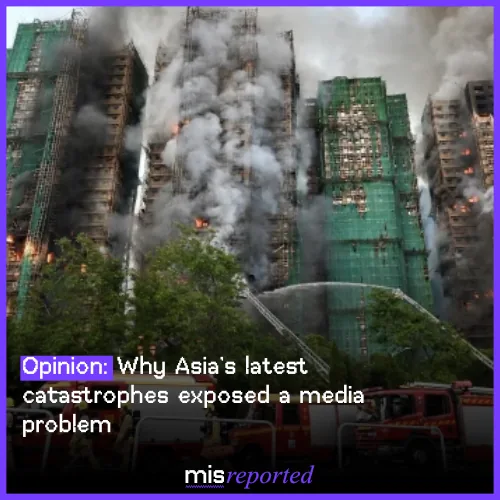
In the immediate aftermath of a disaster, information becomes almost as critical as food, water or medical care. Yet it is precisely at these moments that…
Foreign policy is rarely shaped by battlefield developments alone. It is shaped just as powerfully by how those developments are presented to distant…
In coverage of domestic violence, precision is not a luxury. It is the difference between evidence-based policymaking and narratives built on quicksand.…
Modern newsrooms operate under two competing pressures: the speed demanded by digital platforms and the legal exposure created by high-profile subjects.…
The BBC’s correction this week - reducing its report of 44,000 blocked aid pallets in Gaza to the actual figure of 4,000 - is remarkable not simply for…
The Times’ weekend correction was brief, almost surgically so. In early editions of a report on children’s media, the newspaper had described Transgender…
South Africa’s leaders have discovered that the fastest way to deflect scrutiny is to accuse others of what they themselves stand accused of. The latest…
The Guardian has clarified that one of the detainees described as still being held in the Rakefet facility had in fact been released under the October…
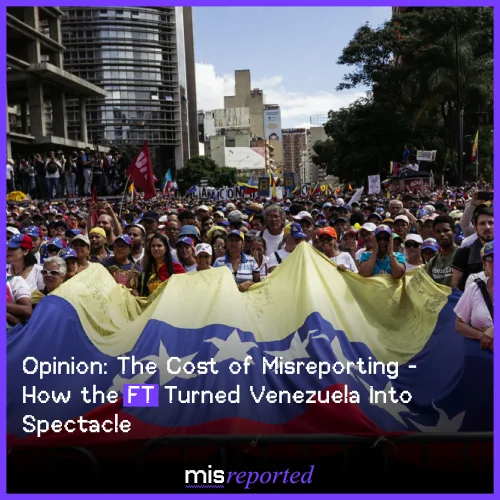
The Financial Times corrected its Venezuela report, admitting the bolívar fell 80 per cent, not 400 per cent.
The BBC repeatedly reported that the International Court of Justice found a “plausible case of genocide” in Gaza. It had not.