

The Times removes Gaza image after concerns over misleading context
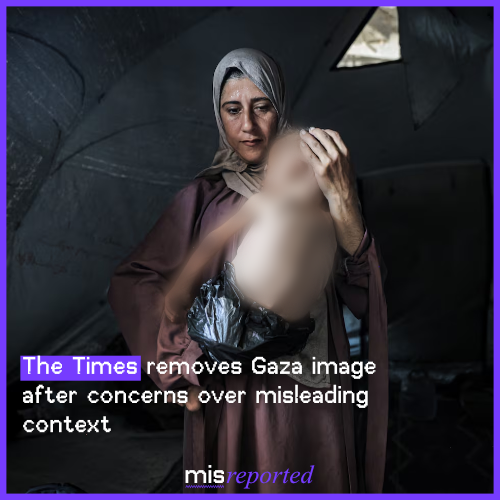
The Times has deleted a photograph from its coverage of Gaza after questions were raised about the accuracy of the image’s framing and the context in which it was presented. The removal followed wider scrutiny of how the photograph, depicting a severely emaciated Palestinian infant, had been used across multiple international news outlets to illustrate claims of mass starvation linked to Israeli restrictions on aid.
The image, taken by a Gaza-based photographer and circulated widely in late July, was initially presented as emblematic of a humanitarian crisis caused by shortages of food. In The Times’ case, it appeared most recently in an article on cultural boycotts of Israel, accompanied by a caption that did not reference the child’s underlying medical condition. After the image was removed, an accompanying paragraph elsewhere in the same article describing Israeli military action and Palestinian deaths was also deleted.
Subsequent reporting outside The Times has shown that the child in the photograph suffers from cerebral palsy and additional complex medical conditions, including chronic respiratory and neurological complications. Medical records published earlier in the summer indicated that the child’s appearance was not the result of malnutrition related to the conflict, a point underscored by the fact that other members of his immediate family were reported to be in good health. That information was not reflected in the image’s original presentation.
Before its removal, the photograph had circulated widely across major broadcasters and newspapers, often stripped of medical context and paired with broader claims about famine. The visual power of the image lent weight to those assertions, even as the factual basis for using it as evidence of systematic starvation was weak. By the time corrections or caveats began to appear, the photograph had already served as a potent symbol in global coverage of the war.
The quiet deletion by The Times addressed the immediate inaccuracy but left unresolved questions about transparency. No explanatory note was appended to the article to clarify why the image had been removed or to alert readers that earlier versions had been misleading. In sensitive reporting environments, especially those involving graphic imagery and civilian suffering, such omissions can matter as much as the original error.
The episode also highlights how quickly narratives can coalesce around evocative material from conflict zones. Images sourced from activists or local freelancers are often published at speed, with limited independent verification, particularly when they appear to corroborate dominant assumptions about the conflict. Once embedded across media ecosystems, those images can prove difficult to dislodge, even when contradictory evidence emerges.
More broadly, the removal underscores a recurring challenge in Israel-Gaza coverage: the tendency for contextual gaps to fall unevenly. Israeli actions are frequently reported in isolation from preceding attacks, military triggers or operational details, while claims about humanitarian impact are conveyed with moral clarity but limited factual specificity. In this case, the deletion of an additional paragraph describing civilian deaths without reference to the precipitating militant attack reflected the same corrective impulse.
Taken together, the edits suggest a recognition that the original framing did not meet standards of accuracy or balance. Yet without a formal correction, readers are left unaware that the article changed, or why. In a media environment where trust is already strained, the distinction between correcting the record and simply erasing it is not trivial.
The case serves as a reminder that images, particularly those involving children, carry extraordinary persuasive force. When they are deployed without full context, they risk misleading audiences and hardening narratives that later evidence does not support. Corrections restore accuracy, but transparency determines whether credibility is ultimately preserved.