

BBC amends background wording on First Intifada in UK protest coverage
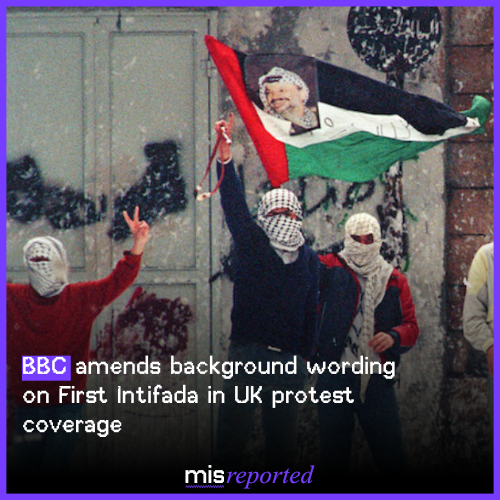
The BBC has amended an article covering a UK policing decision related to protest chants after criticism of its description of the First Intifada. An earlier version of the piece referred to the First Intifada as “a largely unarmed and popular uprising that continued until the early 1990s”. Following backlash, the broadcaster removed that phrasing and added a clarification noting that the language used did not provide “a clear enough or complete picture of the history”, and that the section had been amended to explain the contemporary context around the term’s usage instead.
In its original form, the article sought to offer brief background for readers unfamiliar with the term “intifada” while reporting on police guidance around chants such as “Globalise the Intifada” at UK protests. By characterising the First Intifada primarily as “largely unarmed” and “popular”, the summary implied a limited level of violence and framed the episode as predominantly civic in nature. This framing appeared alongside reporting on arrests linked to concerns about antisemitic incitement, giving the historical description particular salience.
The misstatement altered the balance and implications of the piece. Describing the First Intifada in narrowly qualitative terms shifted emphasis away from its contested and violent dimensions, while the absence of context around casualties or militant activity risked minimising why the term carries heightened sensitivity in present-day discourse. In a report focused on policing thresholds and public order, this framing affected how readers might interpret the proportionality or rationale of law enforcement responses.
The BBC’s decision to retract the wording and replace it with a more general explanation of why the term remains contentious reflects a broader editorial challenge in conflict-related reporting. Background summaries, especially when compressed into a single sentence, can unintentionally flatten complex histories into shorthand descriptors. When those descriptors intersect with live debates about hate speech, terrorism, or public safety, small choices of language can carry disproportionate interpretive weight.
This episode also illustrates the institutional function of corrections in high-trust news organisations. The amendment did not revisit the underlying political arguments around the First Intifada, nor did it adjudicate competing historical narratives. Instead, it acknowledged that the initial wording was insufficient for the context in which it appeared, and adjusted the framing accordingly.
Precision matters acutely in reporting on conflict, law enforcement, and historical violence. When media outlets provide explanatory context, particularly in sensitive areas touching on identity and security, incomplete or overly reductive summaries can distort reader understanding. Corrections in such cases are less about changing conclusions than about restoring proportionality and clarity to the factual frame on which those conclusions rest.