

BBC corrects report after premature claim on Senate confirmation of NASA nominee
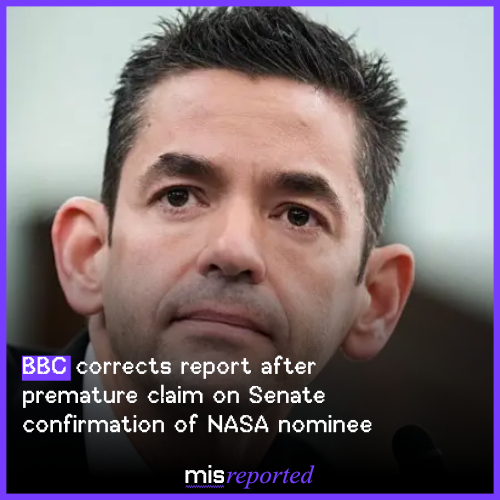
The BBC has corrected an article about the appointment of billionaire investor Jared Isaacman to lead Nasa after an earlier version incorrectly stated that he had been confirmed by the US Senate. The broadcaster appended a correction dated 17 December clarifying that, at the time of publication, Isaacman’s nomination had only passed a procedural vote rather than a final confirmation vote.
Before the correction, the report presented Isaacman’s appointment as settled fact, describing the Senate as having approved his appointment and framing the moment as the end of an “unusual nomination process” that included nomination, withdrawal and renomination. That structure implied a completed institutional decision and positioned subsequent details, including likely tests of his tenure and potential tensions with commercial partners, as analysis of an incoming administrator rather than a nominee still awaiting the decisive step.
The change matters because procedural votes and final confirmation votes are not interchangeable in the US Senate’s advice-and-consent process. A procedural vote can signal momentum and anticipated outcomes, but it does not itself constitute appointment. By collapsing those stages, the original wording compressed chronology and shifted accountability: it attributed to the Senate a completed act it had not yet performed, and it presented the executive branch’s staffing decision as final before the legislature had formally concluded its role.
In a story that turns on process as much as personality, that compression also affects how readers interpret political dynamics. The article describes a nomination that was announced, withdrawn and then revived in a context of shifting alliances and tensions among prominent figures. If confirmation is treated as already secured, the reader is encouraged to read those manoeuvres as concluded and resolved. If the nominee has only cleared a procedural hurdle, the same developments look more contingent, and the remaining steps appear more exposed to political bargaining and institutional scrutiny.
The correction also illustrates a common pressure point in political and governance reporting: the temptation to treat high-probability outcomes as completed events, especially when a vote margin appears predictable or when procedural milestones are reported alongside expected final results. In such cases, small verbs do heavy work. “Confirmed” and “cleared a procedural vote” describe different realities, even if the second often precedes the first.
Precision matters particularly in coverage of appointments to senior public roles, where legitimacy rests on formal sequence. In an era when readers are increasingly attuned to process, and when confidence in institutions is frequently contested, getting the procedural status right is not pedantry. It is the difference between reporting a decision and reporting the path to one.