

The Week That Was: When Israel Becomes the Frame for Everything
This week’s corrections do not scatter randomly across the news agenda. They cluster. And the gravity pulling them together is not policy, health, economics or even war in the abstract. It is Israel. Not always named in headlines, not always central to the stated subject, but repeatedly present as an organising lens through which facts were stretched, assumptions smuggled in, and precision quietly relaxed.
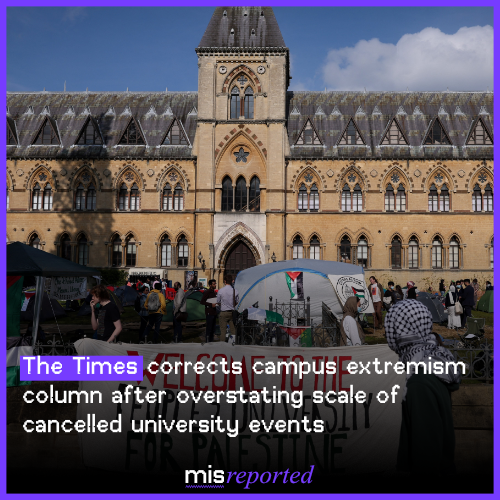
The Times corrects campus extremism column after overstating scale of cancelled university events
The Times corrected an opinion column after clarifying that only one university event, not three, was cancelled on safety grounds.
The original wording overstated the scale of campus refusals, strengthening the impression of widespread institutional retreat.
While the correction restores accuracy, it follows an initial framing that may already have shaped readers’ perceptions of British universities.
BBC corrects Holocaust Memorial Day wording after omitting Jews from death toll
The BBC corrected Holocaust Memorial Day coverage after referring to the victims as “six million people” or “six million mostly Jewish people” rather than six million Jews.
The miswording diluted the specificity of the Holocaust as the targeted genocide of the Jewish people, not a general wartime tragedy.
Although the BBC apologised, the correction followed widespread broadcasts on a day explicitly dedicated to historical precision and remembrance.
The Times corrects benefits and mental health claims in ‘lost generation’ warning
The Times corrected a report on youth welfare after overstating how widely special educational needs support leads to child disability allowance.
It also amended a claim that eighty-three percent of adults have a mental health condition at any one time, clarifying that the figure refers to lifetime prevalence.
Both errors strengthened a political argument about a “lost generation” before being quietly corrected after publication.

CNBC Corrects Venezuela Oil Comeback Report After Misattributing Chevron Claim
CNBC corrected its Venezuela oil production analysis after misattributing a statement about potential output increases to the wrong Chevron executive.
The quote suggested a relatively rapid production boost, lending optimism to an otherwise cautious assessment of Venezuela’s oil prospects.
While the correction fixes attribution, it arrives after the initial framing had already amplified expectations around US-led recovery efforts.
When Speed Becomes the Default - What recent Corrections Reveals about Conflict Reporting
Journalism’s drive for speed often undermines accuracy, especially in conflict zones. The recent correction by Al Jazeera — changing a reported death to a serious injury — shows how initial misframing can shape public perception, harden narratives and distort understanding long after an editor’s note.
BBC clarifies Nipah virus coverage after inaccurate reporting of outbreak scope
BBC News has corrected its reporting on the Nipah virus outbreak after earlier coverage overstated the number of confirmed cases and implied a wider health-screening response. Official figures indicate only two confirmed infections in West Bengal, India, and all traced contacts have tested negative, a significantly narrower outbreak than initially reported.
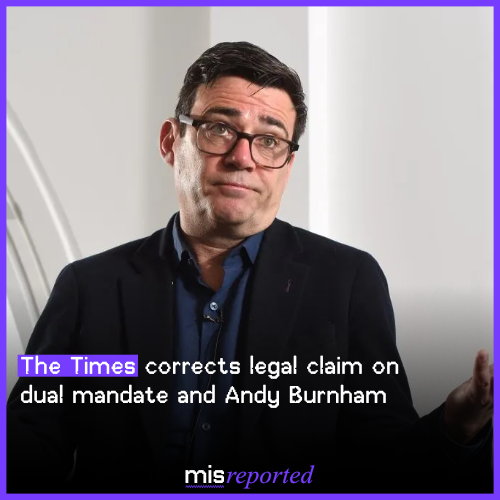
The Times corrects legal claim on dual mandate and Andy Burnham
The Times has corrected its commentary on dual mandates after wrongly suggesting Labour’s NEC could have allowed Andy Burnham to serve as both a mayor with policing powers and an MP. The clarification notes that UK law — not party rules — prohibits mayors with policing powers from also being Members of Parliament.
Al Jazeera corrects report after wrongly stating Palestinian man was killed by Israeli forces
This correction follows a familiar pattern in conflict reporting. In the rush to publish, early claims hardened into definitive statements, only to be walked back once fuller information emerged. As so often, the correction arrived after the narrative had already taken hold.
The Week That Was: Corrections in an Israel-Obsessed News Cycle
This week’s corrections tell a more coherent story than the outlets issuing them might intend. Across politics, culture, lifestyle and foreign affairs, Israel was not simply a recurring subject. It was the gravitational centre around which errors clustered, narratives hardened and corrections followed late.
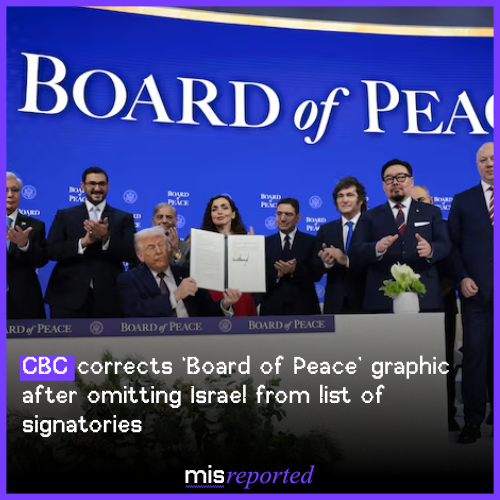
CBC corrects ‘Board of Peace’ graphic after omitting Israel from list of signatories
CBC initially published a graphic listing countries joining Trump’s “Board of Peace” that omitted Israel, despite Israel having accepted an invitation.
The broadcaster later corrected the omission, acknowledging that Israel should have been included among the signatories.
The error highlights how selective omissions, even when later corrected, can reflect and reinforce perceived editorial bias in coverage of Israel-related issues.
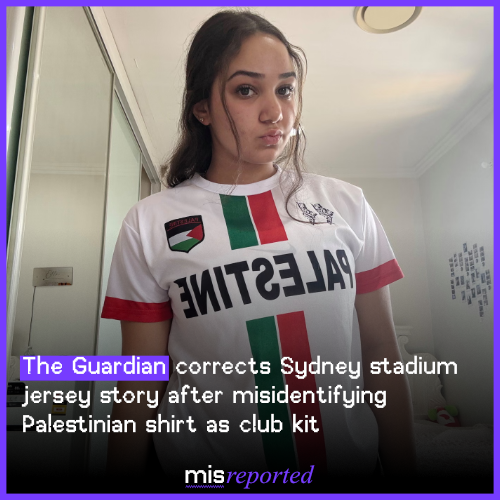
The Guardian corrects Sydney stadium jersey story after misidentifying Palestinian shirt as club kit
The Guardian initially reported that a teenager barred from an A-League match was wearing a legitimate club jersey linked to a Chilean football team.
A later correction clarified that the shirt was not affiliated with any club and was instead a political garment bearing Palestinian symbolism.
The amendment changes the core context of the incident, but only after the original framing had already shaped reader perception.
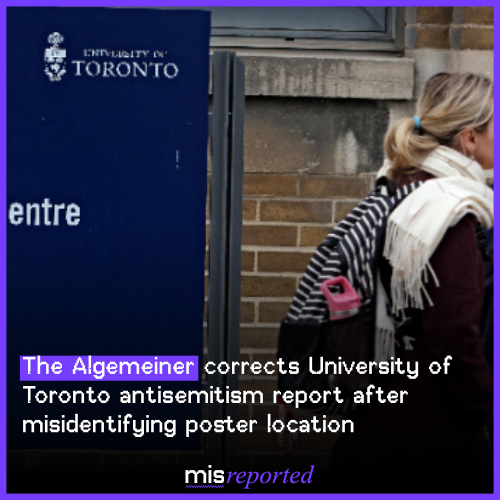
The Algemeiner corrects University of Toronto antisemitism report after misidentifying poster location
The Algemeiner corrected a report on anti-Israel posters at the University of Toronto after clarifying they were not placed near the Jewish Studies department.
The original wording implied a more directly targeted act, heightening the perceived severity of the incident.
While the correction restores factual precision, it follows initial framing that may already have shaped reader interpretation of campus antisemitism.
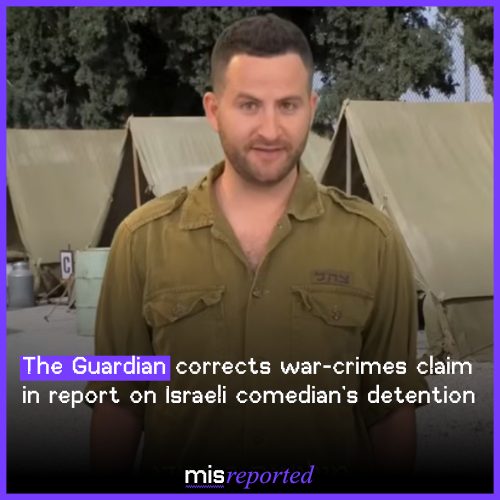
The Guardian corrects war-crimes claim in report on Israeli comedian’s detention
The Guardian amended a report on Guy Hochman’s detention after removing a false claim that he took part in the destruction of a mosque in Gaza.
The allegation originated from a legal group’s dossier and was later retracted by that same group, raising serious questions about verification standards.
As with many Israel-related corrections, the amendment was made quietly, long after the original accusation had already shaped reader understanding.

The Guardian amends food trend piece after misreporting ingredients in Korean bibimbap sauce
The Guardian corrected a food trends article after wrongly listing honey and white miso as ingredients in Korean bibimbap sauce.
The original error subtly reframed a specific Korean dish through a more generic or Westernised lens, undermining the article’s emphasis on “authentic” global flavours.
As with many low-profile corrections in lifestyle journalism, accuracy was restored quietly, after the initial mischaracterisation had already shaped reader perception.
The New York Times corrects Davos analysis after misattributing Trump donation to Larry Fink
The New York Times corrected a Davos analysis after wrongly stating that Larry Fink personally donated $2.5 million to President Trump’s White House ballroom project, rather than BlackRock making the contribution.
The original misattribution strengthened a broader narrative about personal capitulation by global business leaders, sharpening the article’s critique of Davos-era values.
As with many quiet corrections in long-form analysis, the factual fix restores accuracy but leaves intact a framing that may already have influenced reader perception.
The Problem Isn’t Ethical Fashion. It’s How We Report It.
Small reporting errors in ethical fashion stories often look harmless. But when brands and supply chains are misdescribed, the damage is already done. Corrections may fix the facts, but they rarely undo the moral narratives readers absorb first, reshaping how ethics, responsibility and credibility are understood in fashion.
The Financial Times corrects report on UK consultant spending after misstating government timetable
The Financial Times corrected an article on UK government consultant spending after clarifying that ministers have not delayed their target to halve spending, contrary to what was stated in the original report.
The initial wording suggested the government had pushed the deadline back by three years, a claim that materially altered perceptions of policy resolve and fiscal discipline.
As with many technical corrections, the amendment restores the factual record but follows an initial framing that may already have influenced how readers understood the government’s commitment to cutting consultancy costs.
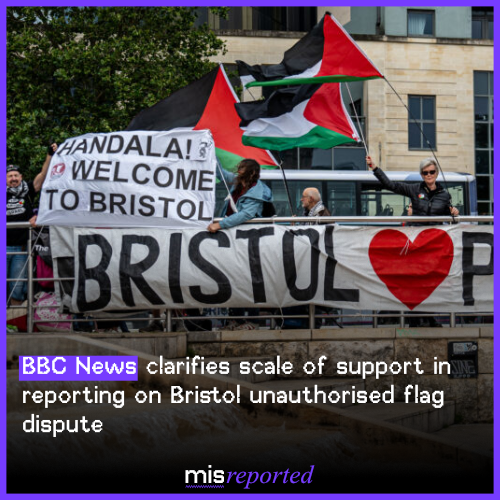
BBC News clarifies scale of support in reporting on Bristol unauthorised flag dispute
The BBC corrected a report on Bristol’s St George’s flag dispute after clarifying that only four of 152 written submissions supported keeping the flags.
The original wording risked overstating public support for the flags in a highly charged community debate.
As with many quiet clarifications, the amendment restores accuracy but follows an initial framing that may already have shaped reader perception.
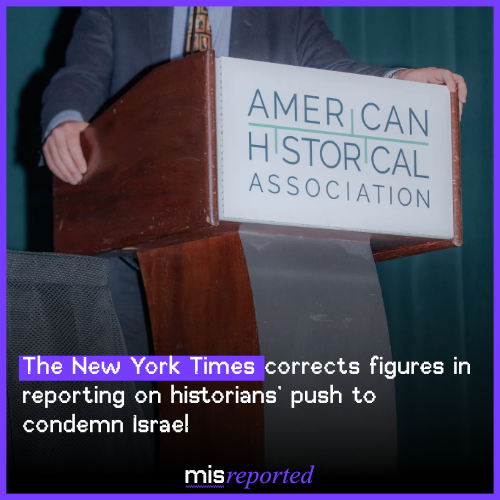
The New York Times corrects figures in reporting on historians’ push to condemn Israel
The New York Times corrected its reporting on the American Historical Association after overstating attendance at a vote and the organisation’s total membership.
Inflated figures risked exaggerating how representative the resolutions were, a key issue in a dispute about internal democracy and institutional authority.
The episode highlights how minor numerical errors can materially shape perception in politically sensitive coverage, particularly on Israel-related issues.