

ABC News corrects claim after wrongly describing seized tanker as sanctioned
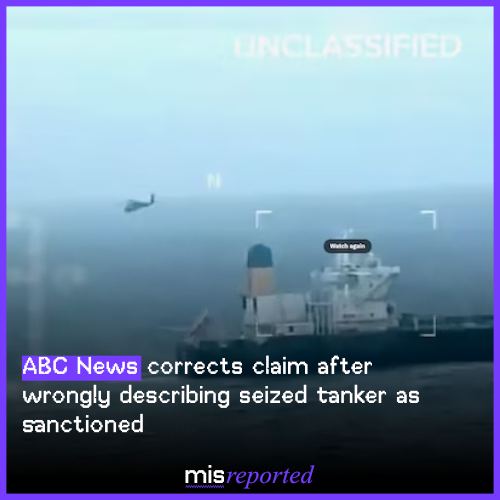
ABC News has amended its reporting on a U.S. Coast Guard operation in the Caribbean after incorrectly stating that an oil tanker seized near Venezuela was subject to international sanctions.
The original article reported that the United States had seized “another sanctioned oil tanker” off Venezuela’s coast, citing comments from Homeland Security Secretary Kristi Noem and situating the operation within President Donald Trump’s threatened blockade of sanctioned Venezuelan oil shipments. That framing placed the incident squarely within an existing sanctions-enforcement regime.
A subsequent editor’s note clarified that the tanker involved in the Dec. 20 operation does not appear on any sanctions list maintained by the United States, the European Union, the United Kingdom or the United Nations, according to shipping data firm Kpler. Unlike a previous interdiction earlier in the month, the vessel had not been formally designated.
The correction materially alters the legal and political character of the event. Seizing a sanctioned vessel suggests enforcement of established international or domestic restrictions. Interdicting a non-sanctioned ship in international waters raises different questions about authority, escalation and precedent, particularly in the context of rhetoric about a “blockade” of Venezuelan oil traffic.
Before amendment, readers could reasonably conclude that the operation was routine sanctions enforcement, reinforcing the impression that Washington was acting squarely within a defined regulatory framework. The corrected version instead places the action closer to a discretionary show of force tied to broader pressure on the Maduro government, rather than a response to a specific sanctions violation.
The episode illustrates how easily official language can harden into factual claims when reported at speed. Statements about “sanctioned oil” and “illicit movement” blurred into an assertion about the status of the vessel itself, even though that status was verifiable through public sanctions lists. In foreign policy reporting, where terminology carries legal weight, such slippage is consequential.
ABC News’ correction restores accuracy on a key point. But it also underscores how framing choices can amplify the sense of inevitability or legitimacy around contested actions before their factual basis is fully established.