


AI Didn’t Burn Dinner - It Burned the Cookbook
The Guardian’s recent correction to its reporting on AI-generated recipes was narrow, technical and justified. It clarified that a notorious “cook with glue” example stemmed from misread Reddit comments rather than satire, and that Meta trained its models on pirated databases rather than compiling them. Accuracy demanded those fixes. But focusing too heavily on the mechanics of the error risks missing the larger point. Even when the facts are tidied up, the underlying problem remains intact, and it is growing.
The Guardian amends letters page after numerical error in solar geoengineering debate
The Guardian corrected its reporting in a letters exchange on solar geoengineering, clarifying that a cited claim referred to a potential cooling of 1 degree Celsius, not 10 degrees Celsius.
The original framing suggested a far larger climatic impact from solar radiation modification, which materially altered how readers would interpret the scale and plausibility of the technology.
That distinction matters, and misframing it risks undermining public trust, inflating narratives, or distorting accountability.
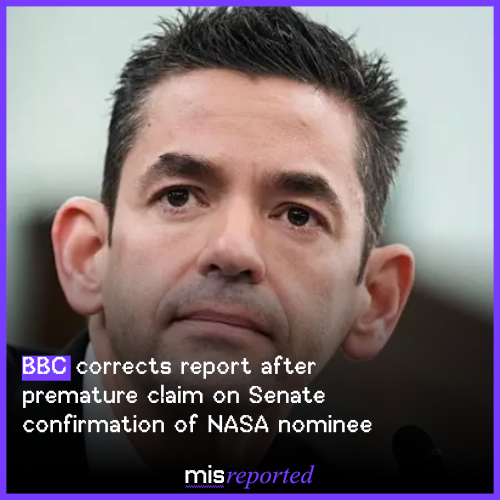
BBC corrects report after premature claim on Senate confirmation of NASA nominee
BBC corrected its reporting on Jared Isaacman’s appointment, clarifying that his nomination had only passed a procedural vote at the time, rather than final Senate confirmation.
The original framing suggested he had already been confirmed as Nasa chief, which materially altered how readers would interpret the status and finality of the appointment process.
That distinction matters, and misframing it risks undermining public trust, inflating narratives, or distorting accountability.

BBC amends background wording on First Intifada in UK protest coverage
BBC corrected its reporting on background references to the First Intifada, clarifying that its earlier language did not provide a sufficiently complete or clear historical picture.
The original framing suggested a largely unarmed and benign uprising, which materially altered how readers would interpret the sensitivity and contemporary implications of the term.
That distinction matters, and misframing it risks undermining public trust, inflating narratives, or distorting accountability.

The Guardian amends AI recipe coverage after errors on source attribution and training data
The Guardian corrected its reporting on AI-generated recipe content, clarifying that a cited glue-cooking error originated from Reddit comments and that Meta used, rather than compiled, the Library Genesis database.
The original framing suggested failures involving satirical sources and direct creation of pirated datasets, which materially altered how readers would interpret responsibility and scale.
That distinction matters, and misframing it risks undermining public trust, inflating narratives, or distorting accountability.
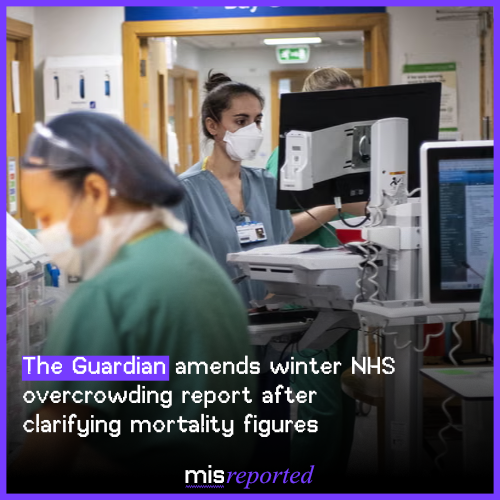
The Guardian amends winter NHS overcrowding report after clarifying mortality figures
The Guardian corrected an NHS winter pressures article after clarifying that a mortality estimate attributed to last winter in fact covered the whole of 2024 and referred to delays before hospital admission.
The original framing risked implying a more direct and time-specific link between delayed discharges and reported deaths than the underlying analysis supported.
While pressures on hospitals remain acute, the episode highlights how imprecise use of statistics can amplify alarm and blur important distinctions in public health reporting.

The Guardian amends climate finance report after multiple corrections and clarifications
The Guardian revised its climate finance report after acknowledging that key institutions criticised in the article were not offered a right of reply prior to publication.
Sections of the article were removed or clarified after it became clear that certain examples were historically unrelated to the funds under scrutiny and that attribution in the headline was insufficient.
The episode underscores how reporting on complex policy areas can overextend the implications of advocacy research unless methodology, scope and institutional responses are clearly distinguished from the outset.
Why the world feels permanently on edge, even when it isn’t
If there is a single lesson from the past year of corrections, deletions and quiet walk-backs, it is that public anxiety is no longer driven only by events themselves, but by how they are first framed. In 2025, much of daily life felt brittle. Institutions seemed unstable, crises unending, trust thin. Yet, when the record was revisited, the underlying facts were often narrower, slower and more bounded than the coverage suggested.

RT India deletes post claiming Pakistan’s prime minister was left waiting for Putin
RT India deleted a post claiming Pakistan’s prime minister was kept waiting by Vladimir Putin, later saying the account may have misrepresented events.
The original framing contrasted with official footage and reporting that showed routine diplomatic engagement at an international forum.
The episode illustrates how speculative narratives in geopolitical reporting can spread quickly before being corrected, shaping perception even when later withdrawn.
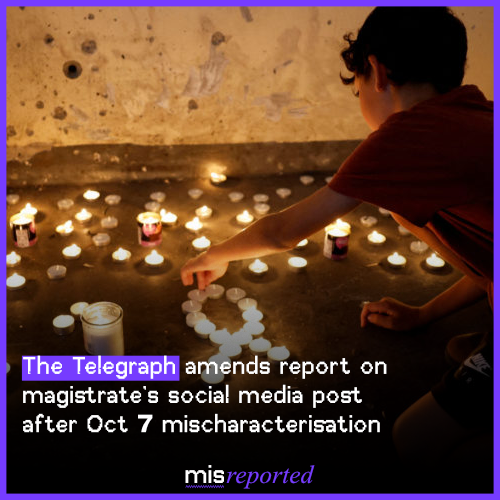
The Telegraph amends report on magistrate’s social media post after Oct 7 mischaracterisation
The Telegraph corrected an article after clarifying that a Hamas video shared by a magistrate did not contain language describing Israel as a cancer to be eradicated.
The original framing blurred the distinction between Hamas’s broader rhetoric and the specific content of the video in question.
That distinction matters, particularly in reporting on extremism, where precision determines whether scrutiny is evidence-based or overstated.
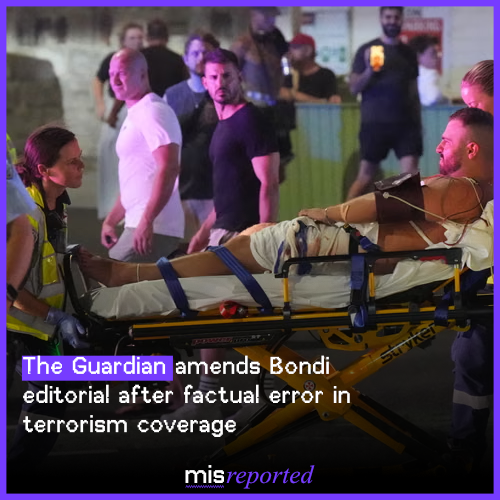
The Guardian amends Bondi editorial after factual error in terrorism coverage
The Guardian corrected an editorial on the Bondi Beach shootings after misstating the year of the Christchurch mosque attack.
The amendment fixed a factual error but left unchanged a broader framing that quickly universalised an antisemitic attack into a general social parable.
That pattern reflects a recurring issue in media coverage where antisemitic violence is acknowledged, then diluted through abstraction rather than examined on its own terms.

NPR corrects details on timing and location in Brown University shooting coverage
NPR corrected its reporting on the Brown University shooting, clarifying that President Trump spoke and Brown’s emergency alert updates were issued on Saturday night, not Friday night, and that the shooting happened inside the Barus and Holley building.
The original framing suggested a different timeline and a different physical setting, which materially altered how readers would interpret institutional response, risk and security context.
That distinction matters, and misframing it risks undermining public trust, inflating narratives, or distorting accountability.
The Week That Was: Speed, Assumption and the Cost of Being First
If there is a unifying theme to this week’s corrections, it is not ideology or incompetence, but haste. Across politics, health, technology and foreign affairs, established outlets amended stories that were broadly sound yet weakened by errors of framing, verification or basic fact-checking.
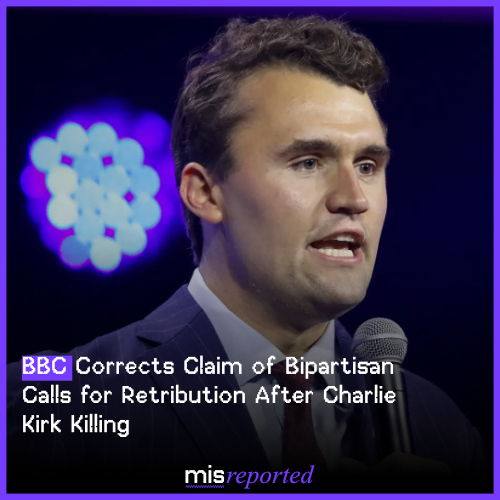
BBC Corrects Claim of Bipartisan Calls for Retribution After Charlie Kirk Killing
The BBC corrected an introduction to its coverage of Charlie Kirk’s killing after wrongly claiming that senior Republicans and Democrats had both called for retribution.
The statement was not supported by evidence in the reporting and was acknowledged by editors as an error that should not have appeared.
Such misframing matters because it can exaggerate political consensus, inflame tensions and shape public understanding before readers encounter the facts.

Financial Times Corrects Claim on Uber Drivers’ Pay After Error on Pick-Up Time
The Financial Times corrected its reporting after stating that Uber drivers were not paid for time spent travelling to pick-up locations.
Uber does factor pick-up time into the algorithm that determines driver pay, making the original claim inaccurate.
The correction highlights how minor factual errors can meaningfully distort public understanding of complex gig economy pay models.

NewsGuard Corrects False AIPAC-ChatGPT Claim as Media Outlets Fail to Verify Viral Screenshot
NewsGuard corrected claims that ChatGPT displayed an AIPAC advertisement after finding the widely shared screenshot was fabricated.
The original reporting echoed a familiar pattern in which Israel-related allegations are amplified without standard verification checks.
That distinction matters, and misframing it risks undermining public trust, inflating narratives, or distorting accountability.

CNBC clarifies Nvidia’s response in coverage of alleged China chip smuggling
CNBC corrected its reporting on Nvidia’s response to allegations about Blackwell chips in China, clarifying that the company said it had seen no substantiation for the claims and viewed the alleged smuggling as far-fetched, while still pursuing any credible tips.
The original framing suggested a more confirmatory or less sceptical Nvidia posture toward the smuggling allegations, which materially altered how readers would interpret both the company’s exposure and the robustness of export controls.
That distinction matters, and misframing it risks undermining public trust, inflating narratives, or distorting accountability.
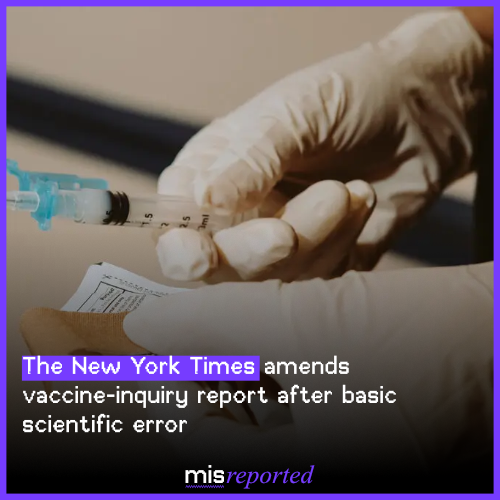
The New York Times amends report on F.D.A. vaccine inquiry after basic scientific error
The New York Times corrected its reporting on the F.D.A.’s expanded Covid vaccine inquiry after misstating that pertussis is caused by a virus rather than a bacterium.
The original framing embedded a basic scientific error in an article about vaccine oversight, undercutting the credibility of its coverage on a politically charged public-health issue.
That distinction matters, and misframing it risks undermining public trust, inflating narratives, or distorting accountability.
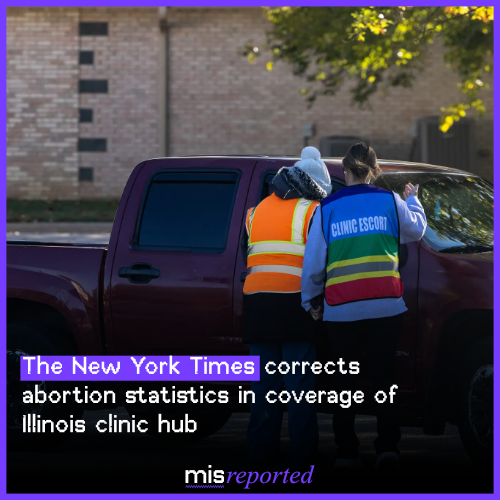
The New York Times corrects abortion statistics in coverage of Illinois clinic hub
The New York Times corrected its reporting on abortion access after misstating a national statistic in a feature on Carbondale, Illinois.
The original framing treated a figure limited to states without total bans as a nationwide total, altering how readers would assess the scale of abortion provision.
That distinction matters, and misframing it risks undermining public trust, inflating narratives, or distorting accountability.
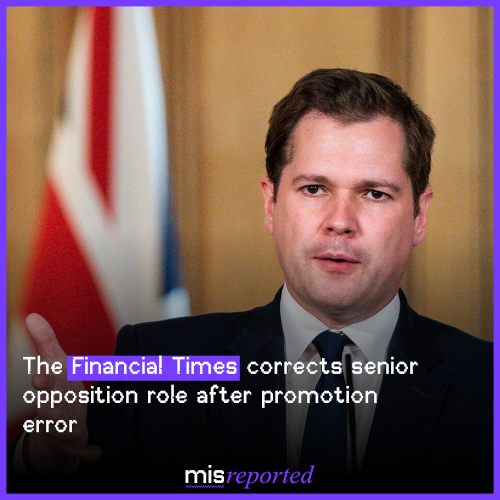
The Financial Times corrects senior opposition role after promotion error
The Financial Times corrected a promotional error that misidentified Robert Jenrick as shadow chancellor, clarifying that he is the UK’s shadow secretary of state for justice.
The original mistake involved a basic and well-established fact about a senior opposition figure, suggesting the material was produced in haste rather than through contested interpretation.
That distinction matters, and misframing it risks undermining public trust, inflating narratives, or distorting accountability.