

CNBC clarifies Nvidia’s response in coverage of alleged China chip smuggling
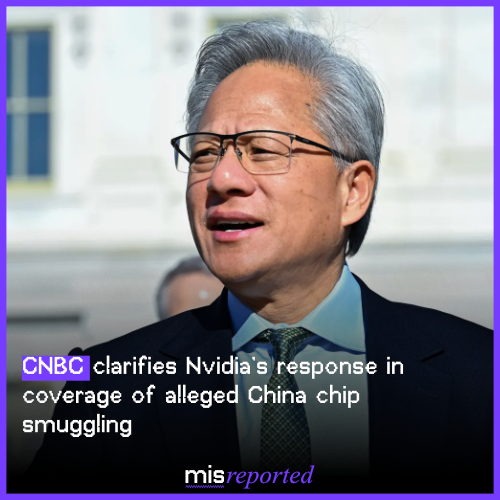
CNBC has corrected its reporting on Nvidia’s response to allegations that its most advanced Blackwell AI chips are being used illegally in China by the startup DeepSeek, after misstating the nature of the company’s reply. The broadcaster has now acknowledged that an earlier version of its article mischaracterised Nvidia’s position on the reported smuggling.
The original piece reported on claims, first aired by The Information, that DeepSeek was using Blackwell chips “snuck into the country without authorisation” to train a new AI model, despite U.S. export controls that bar the sale of such hardware to China. Against a backdrop of heightened political sensitivity over U.S.–China technology flows, Nvidia’s comment carried obvious weight for investors, policymakers and regulators.
In its updated version, CNBC quotes Nvidia as saying it has “not seen any substantiation” for allegations that its hardware is being used in “phantom data centers” built to deceive the company and its OEM partners before being dismantled and reassembled in China. The spokesperson added that while such smuggling “seems far-fetched,” Nvidia pursues any tip it receives. The correction makes clear that Nvidia did not confirm the underlying report, but instead expressed scepticism while leaving open the possibility of investigation.
By contrast, the earlier framing implied a different posture. While the precise wording of the initial misstatement is not reproduced, CNBC’s own correction notes that “the nature of the company’s reply was misstated,” suggesting that Nvidia’s response may have been presented as more validating or less sceptical of the alleged smuggling than it actually was. In a climate where any hint of sanction evasion attracts political and market reaction, that distinction is material.
The story sits at the intersection of geopolitics, export control policy and the commercial fortunes of one of the world’s most closely watched technology companies. Nvidia’s relationship with Chinese customers is already a flash point in Washington, particularly after President Donald Trump’s recent announcement that the firm may ship H200 chips to “approved customers” in China on revenue-sharing terms with the U.S. government. Against that backdrop, any suggestion that Nvidia’s newest chips are already being used illicitly in China can easily harden into a narrative of regulatory failure and corporate complicity.
CNBC’s correction restores Nvidia’s actual on-the-record stance: publicly unconvinced, but alert to possible violations. It also underlines how easily reporting on export controls and alleged sanctions evasion can over-interpret cautious corporate statements. When a single sentence can move markets or feed calls for tighter restrictions, accurately reflecting the tone as well as the substance of a company’s response is not a secondary detail.