

BBC News clarifies scale of support in reporting on Bristol unauthorised flag dispute
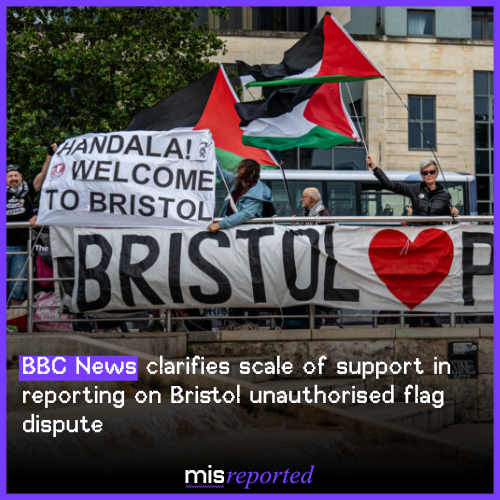
The BBC has amended a report on Bristol City Council’s handling of unauthorised St George’s flags after clarifying how many submissions supported keeping the flags in place, correcting an impression created by the original wording.
An earlier version of the article stated that “some people” had submitted written statements ahead of the council meeting arguing that the flags should remain. A clarification published the following day confirmed that only four of the 152 written submissions took that position, with the vast majority backing their removal or expressing concern about their impact.
The distinction matters because the story centred on community division, intimidation and the balance of public opinion in a politically sensitive debate over national symbols. By using vague language to describe support for the flags, the original framing risked overstating the breadth of backing for their continued display and underplaying how marginal that position was in formal submissions to the council.
The correction also sits alongside a wider narrative choice in the piece, which emphasised reported distress, threats and community tension while noting that “nobody in favour of flags came to City Hall to speak”. In that context, precision about written submissions becomes especially important. When participation is limited, small numbers can easily appear larger than they are if not clearly specified.
The BBC’s clarification restores proportionality to the account, but as with many similar amendments, it appears after the article had already circulated widely. Readers encountering the initial version would reasonably have inferred a broader constituency in favour of the flags than the record supports, shaping perceptions of how contested the issue truly was.
This episode reflects a familiar pattern in local political reporting. The underlying facts are not in dispute, but loose phrasing at the margins can subtly tilt how debates over identity, symbolism and public space are understood. Corrections address the record, but rarely travel as far as the first impression.