

BBC News clarifies description of Elon Musk-linked lottery during US election coverage
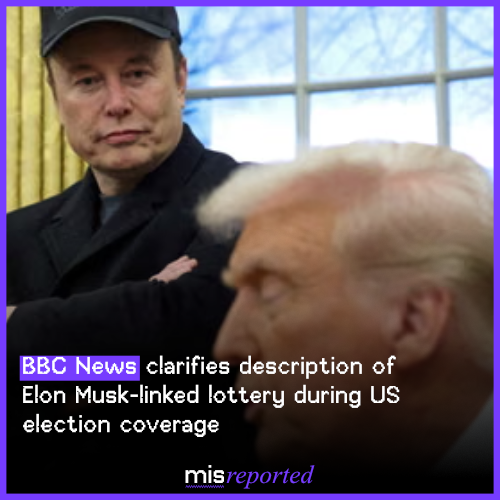
The BBC has issued a clarification to a statement made during its News at Six bulletin on 6 June 2025 concerning Elon Musk’s political activities during the US presidential election campaign. The correction addresses how the programme characterised lotteries run in swing states, including Pennsylvania, that offered a chance to win one million dollars. The BBC confirmed that it had inaccurately described the scheme as offering money “to vote Republican”. In fact, eligibility to enter did not require voting for any party.
According to the clarification, individuals were eligible to participate if they were registered voters who had signed a pro-US Constitution petition organised by America PAC, a campaign group set up by Mr Musk to support the Republican nominee, Donald Trump. While the PAC had an explicit political orientation, the act required to enter the lottery was signing a petition rather than committing to a vote. The BBC acknowledged that its original wording failed to reflect that distinction.
Prior to the correction, the broadcast’s phrasing implied a direct quid pro quo between financial reward and partisan voting behaviour. Such a framing suggested that voters were being paid to cast a ballot for a particular party, a practice that would carry clear legal and ethical implications in the United States. Even without making an explicit allegation of illegality, the wording blurred the line between political advocacy and inducement, and therefore risked misleading viewers about what had actually occurred.
The misstatement materially altered the scale and character of the activity being described. A lottery linked to signing a constitution-themed petition by a partisan group is substantially different from a lottery contingent on how an individual votes. The former sits within the familiar terrain of campaign mobilisation and messaging, while the latter evokes voter manipulation. By collapsing these two categories, the original report amplified the perceived extremity of Mr Musk’s actions and narrowed the space for readers and viewers to assess them accurately.
The episode also reflects a broader challenge in reporting on unconventional political campaigning, particularly when wealthy individuals and high-profile figures are involved. Novel tactics can strain journalistic shorthand, encouraging compressed descriptions that convey intent at the expense of process. Corrections of this kind, when they occur during fast-moving news cycles, highlight the tension between speed, clarity and precision in broadcast journalism.
Precision matters acutely in election reporting, where language can shape public understanding of legitimacy and conduct. Small inaccuracies in describing mechanisms or requirements can cascade into larger misconceptions about democratic processes. By clarifying the factual basis of its report, the BBC has narrowed the gap between what was implied and what took place, underscoring the importance of exact wording when covering politically sensitive activities.