

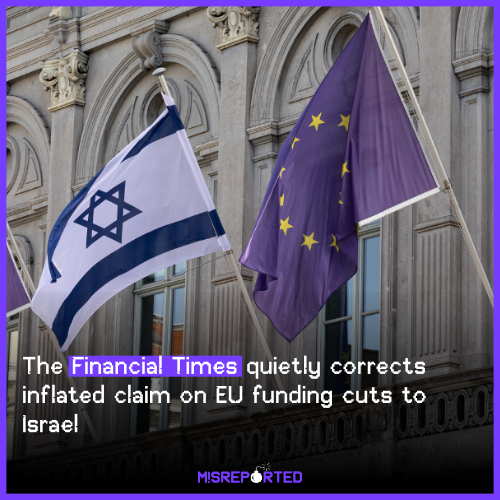
FT quietly corrects inflated claim on EU funding cuts to Israel
The Financial Times has amended an article after wrongly reporting that the European Commission planned to suspend €14bn worth of funding for projects in Israel. The actual figure, confirmed by the Commission, was €14mn.
The original piece, published on 11 September, stated that billions of euros in support would be frozen. In fact, the Commission announced the suspension of €14mn for “institutional co-operation projects” alongside a pause on a smaller tranche of regional funding.
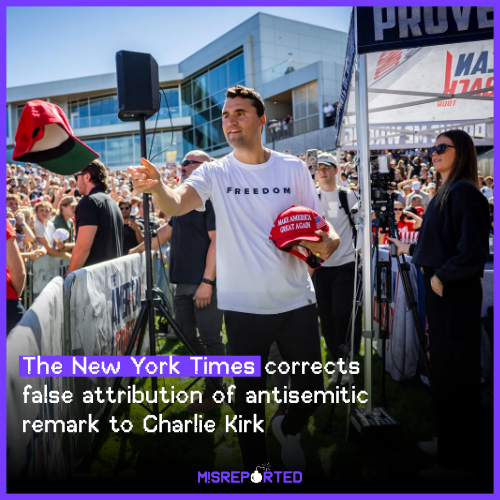
The New York Times corrects false attribution of antisemitic remark to Charlie Kirk
The New York Times has been forced to correct an article that wrongly attributed an antisemitic statement to conservative activist Charlie Kirk.
The article, Where Charlie Kirk Stood on Key Political Issues, claimed Kirk himself had made the remark during an episode of his podcast. In fact, he was quoting from a social media post — one amplified by Elon Musk — before going on to criticise it.
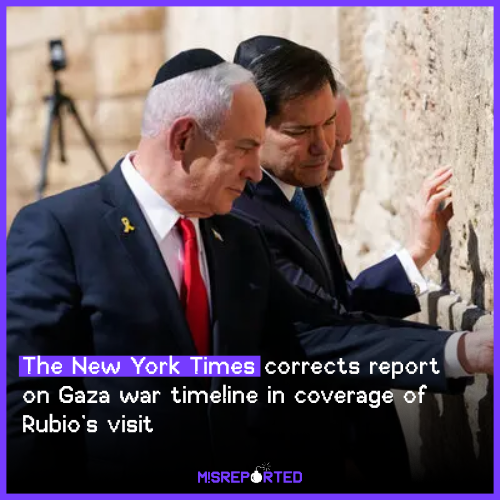
The New York Times corrects report on Gaza war timeline in coverage of Rubio’s visit
The New York Times has amended its reporting on Secretary of State Marco Rubio’s trip to Israel after misstating the length of the conflict in Gaza.
An article published on 13 September said that the war had been raging for nearly three years. In fact, the fighting began nearly two years ago. The correction was appended to a piece describing Rubio’s consultations with Israeli officials over their planned military offensive in Gaza City and President Trump’s frustrations with Prime Minister Benjamin Netanyahu’s approach to the conflict.
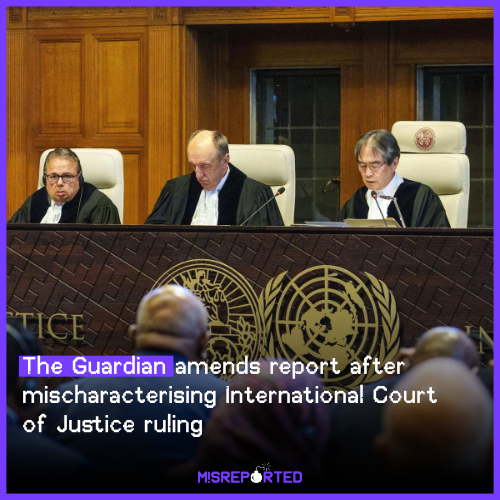
The Guardian amends report after mischaracterising ICJ ruling
The Guardian has issued another correction concerning its reporting on the International Court of Justice (ICJ) and proceedings over Israel and Gaza.
In a 5 September article by Beirut correspondent William Christou, the paper stated that the ICJ had ruled in January 2024 that the claim of genocide was “plausible”. This language has been widely misreported in international coverage but is not an accurate reflection of the court’s decision.
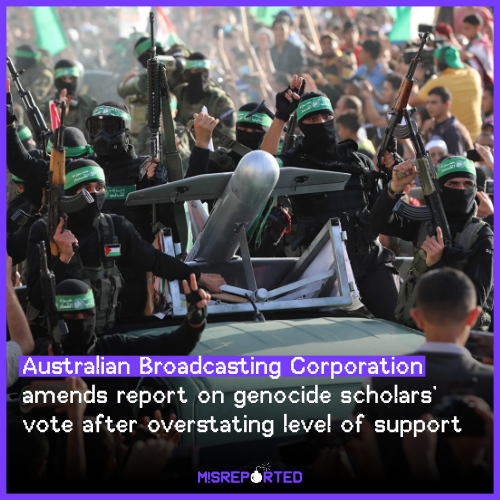
Australian Broadcasting Corporation amends report on genocide scholars’ vote after overstating level of support for Gaza resolution
ABC has issued a correction after multiple outlets — Radio News, News Channel and News Digital — mischaracterized the voting figures behind a resolution from the International Association of Genocide Scholars (IAGS) declaring Israeli actions in Gaza as genocide.
Initial reports on September 2 said a majority of the association’s 500 members had voted in favor of the resolution. In reality, participation was far lower. Only 28 percent of members took part in the ballot, of whom 86 percent voted in favor.
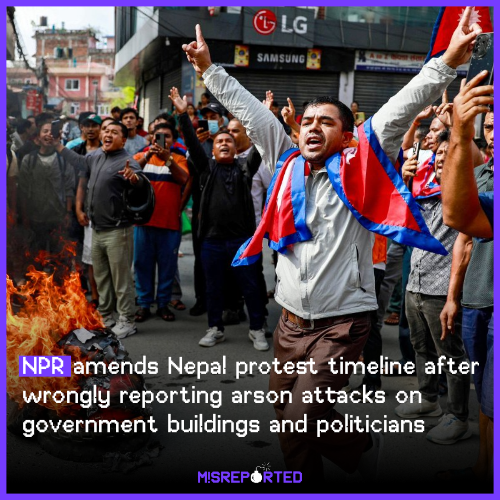
NPR amends Nepal protest timeline after wrongly reporting arson attacks on government buildings and politicians’
NPR has issued a correction to its coverage of the mass Gen Z protests in Nepal, acknowledging that arson attacks on government buildings and the homes of senior politicians took place on Tuesday, not Monday as initially reported.
The original article suggested that the most severe violence erupted on the very first day of demonstrations, when young Nepalis began protesting corruption and a government ban on social media platforms. That framing implied an immediate descent into destruction.
In fact, the first day’s unrest, while deadly, did not involve the torching of parliament, the Supreme Court, or the residences of political leaders.
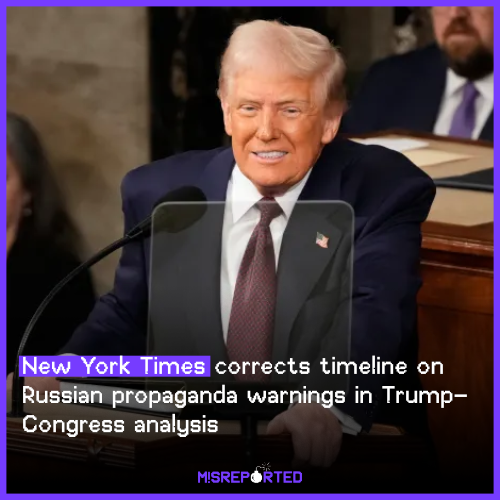
NYT corrects timeline on Russian propaganda warnings in Trump–Congress analysis
The New York Times has corrected an error in its recent news analysis on how the Trump administration has undermined Congress. The article originally stated that the Foreign Malign Influence Center (FMIC), established by Congress to counter election interference, played a major role warning about Russian propaganda during the 2020 presidential campaign. In fact, the FMIC only issued such warnings in 2024.
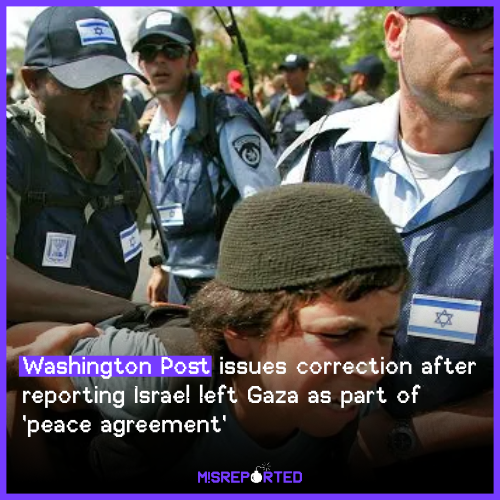
Washington Post issues correction after reporting Israel left Gaza as part of 'peace agreement'
The Washington Post’s correction this week, after it inaccurately described Israel’s 2005 withdrawal from Gaza as the outcome of a “peace agreement,” is more than a minor editorial slip. It touches on one of the most contested narratives in modern Middle Eastern politics, and in doing so illustrates the hazards faced by Western media in reporting on conflicts where precision is as politically charged as it is journalistic.